


- Joined
- Feb 2, 2011
- Messages
- 2,412
NEW RELEASES FOR FEBRUARY 2026
THE SECOND WORLD WAR
GERMAN ARMOUR
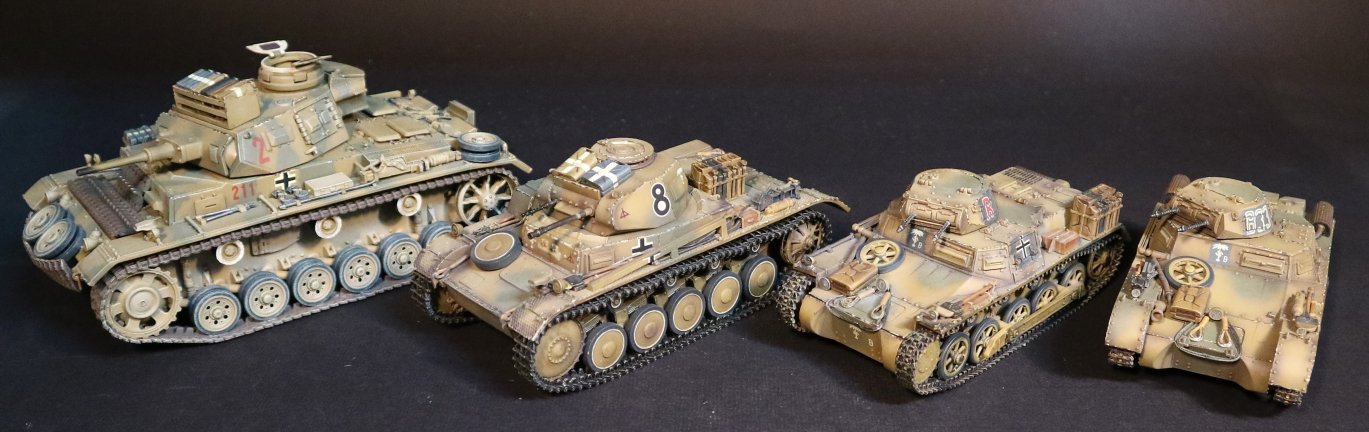
When the 5. leichte Division arrived in Libya in February 1941, it composed the initial elements of Generalleutnant Erwin Rommel's Sperrverband (blocking force) that would later become the famous Deutsches Afrikakorps. Redesignated as the 21. Panzer-Division (21. Pz.Div.) in August, upon arrival in North Africa its core armored formation was Panzer Regiment 5. Unlike its sister unit 15. Panzer-Division, which possessed a freshly issued complement of panzers, 21. Pz.Div. began the desert campaign with older issued equipment, including a full complement of Panzer I Ausf. A and Ausf. B light tanks, vehicles originally designed in the early 1930s as training tanks but pressed into combat service due to Germany’s rapid rearmament and expansion.
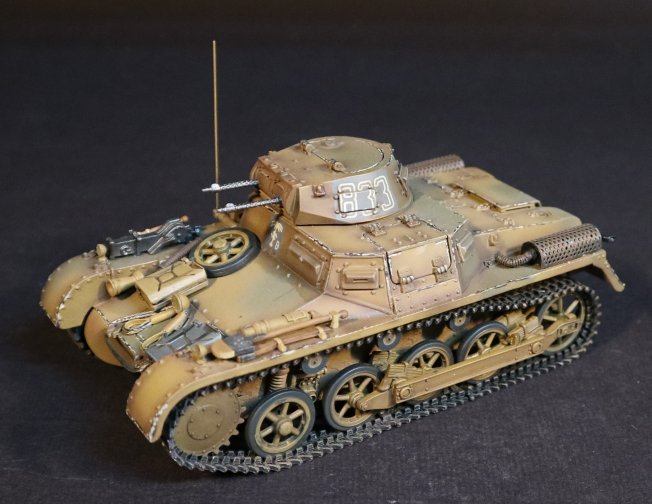
GA-15
THE SECOND WORLD WAR,
GERMAN ARMOUR,
Panzer I Ausf. A #833
Panzer-Regiment 5, 21. Panzer-Division, Deutsches Afrikakorps
North Africa, 1941
Despite their light armor and modest armament of twin 7.92 mm MG13 machine guns, the Panzer I Ausf. A and B played a crucial role during the opening phase of Rommel’s audacious desert campaign. Speed, relatively good mechanical reliability, and effective combined-arms tactics allowed these light panzers to contribute meaningfully to the rapid advance across Cyrenaica in the spring of 1941. In the hands of experienced crews, and supported by anti-tank guns, artillery, and the ever-present threat of Luftwaffe air support, even these lightly armed vehicles helped unhinge British defenses and sow confusion among Allied forces still reeling from Germany’s unexpected arrival in North Africa.
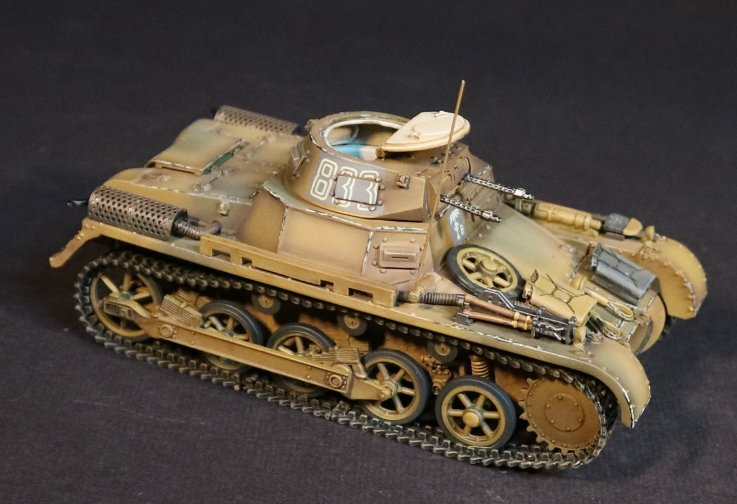
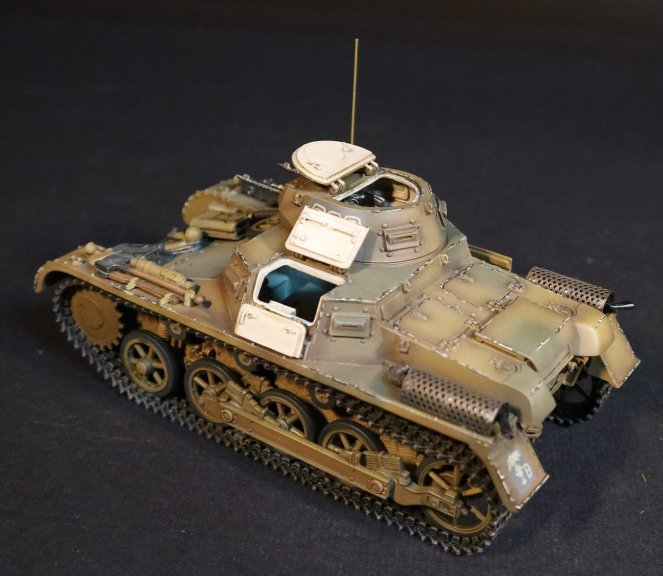
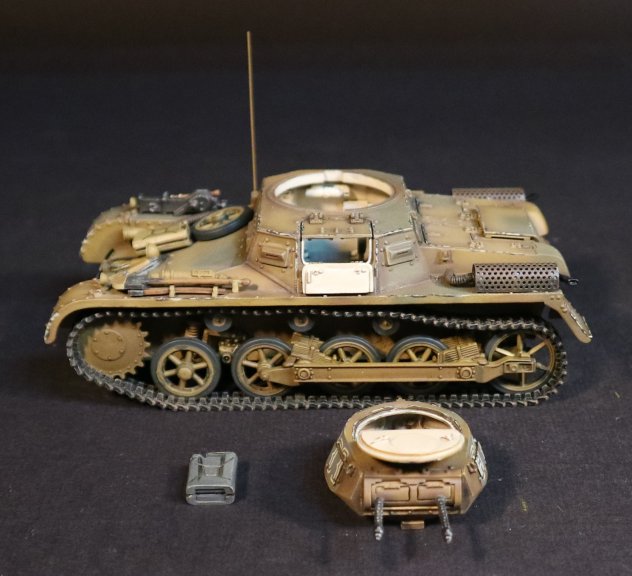
The Panzer I Ausf. A was the earliest production version, distinguished by its smaller engine and shorter hull with one less roadwheel. Its lighter weight gave it good mobility on firm desert terrain, though the limited engine power struggled in deep sand.
The follow-on Panzer I Ausf. B addressed some of these shortcomings by incorporating a more powerful engine, which required a slightly lengthened hull and an additional road wheel. While the Ausf. B offered improved performance and endurance in harsh desert conditions, both variants were already vulnerable to virtually any Allied anti-tank weapon; however, they were still capable of performing reconnaissance, flank security, and infantry support roles. Some Panzer I tanks were even pressed into service to tow Stuka dive bombers at forward airfields. Although Rommel's fame was due to the skillful employment of more capable weapon systems like the Panzer III, Panzer IV, and FlaK 36 8.8 cm dual-purpose gun, the Panzer I's contribution during the critical opening months of the desert war was significant, helping Rommel seize the initiative and establish the legend of the Afrikakorps.
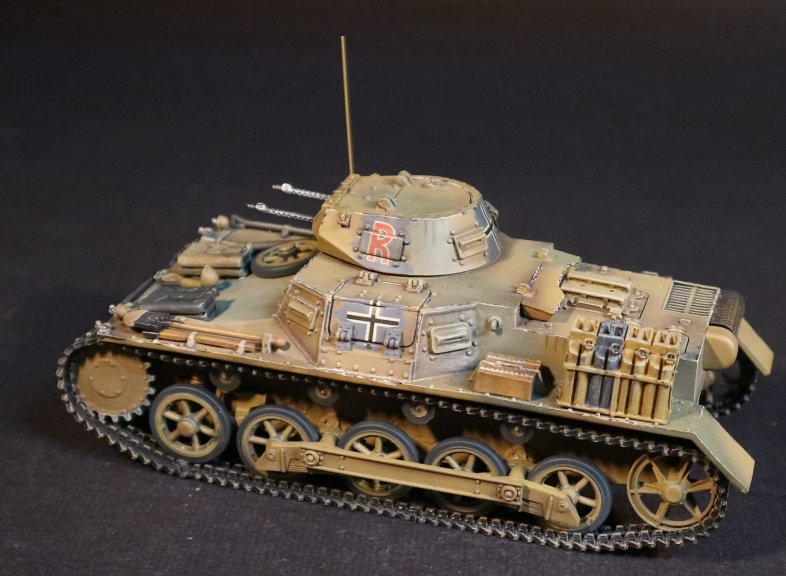
GA-15B
THE SECOND WORLD WAR,
GERMAN ARMOUR,
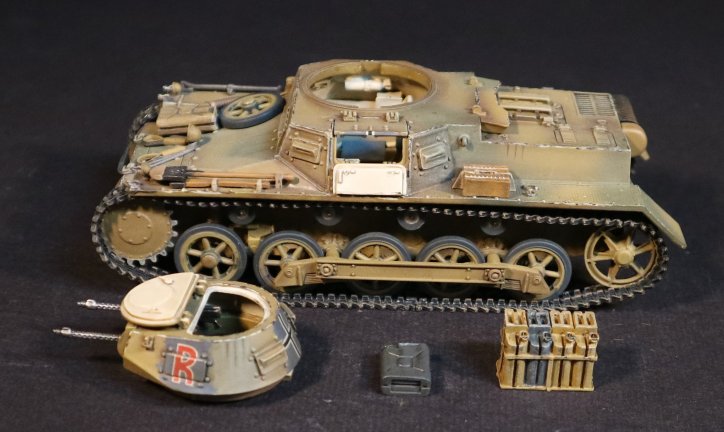
Panzer I Ausf. B "R"
Panzer-Regiment 5, 21. Panzer-Division, Deutsches Afrikakorps
North Africa, 1941
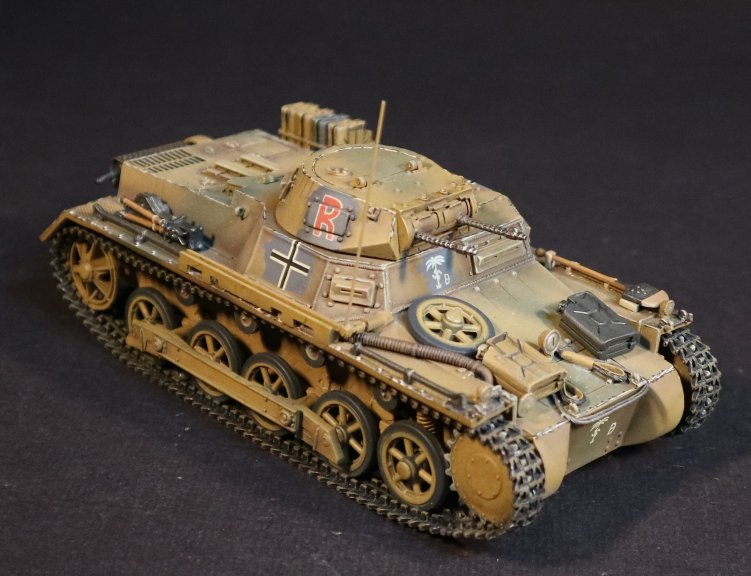
JJ Designs is pleased to announce the release of two Panzer I models faithfully recreating two of the tanks from the 21. Panzer-Division as they spearheaded Germany’s first armored operations in North Africa. Originally arriving in North Africa in standard solid dark grey paint jobs, the panzers were later overpainted with tropical camouflage colors, reflecting the transitional nature of German armor during this formative period of the desert war.
Panzer I Ausf. A #833 represents a tank of 8. Kompanie that would have fought on the front lines with its sister Panzer II, III, and IV tanks.
Panzer I Ausf. B #“R” represents a tank from the reconnaissance platoon of the Regimental Stab (headquarters).
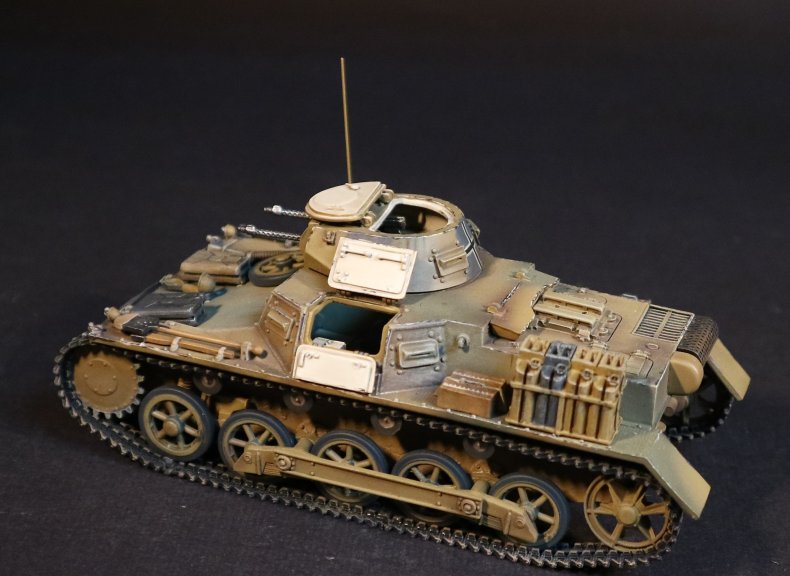
In addition to their accurate paint schemes and markings, the John Jenkins Designs Panzer I Ausf. A and Panzer I Ausf. B include opening hatches and interior detail. JJD hopes these Panzer I Ausf. A and Ausf. B models will serve as evocative additions to any 1/30 scale collection depicting the early battles of the Deutsches Afrikakorps.
From Rommel’s bold dash across Cyrenaica in early 1941, through the first siege of Tobruk, to the transitional period when obsolete light tanks fought alongside newer machines, these Panzer I vehicles represent the gritty reality of armored warfare at the dawn of the North African campaign.
Once again, a big thank you to, Steve “The Foreign Expert” (Hunter Rose)
Please Contact your Dealer to pre-order!
THE SECOND WORLD WAR
GERMAN ARMOUR
When the 5. leichte Division arrived in Libya in February 1941, it composed the initial elements of Generalleutnant Erwin Rommel's Sperrverband (blocking force) that would later become the famous Deutsches Afrikakorps. Redesignated as the 21. Panzer-Division (21. Pz.Div.) in August, upon arrival in North Africa its core armored formation was Panzer Regiment 5. Unlike its sister unit 15. Panzer-Division, which possessed a freshly issued complement of panzers, 21. Pz.Div. began the desert campaign with older issued equipment, including a full complement of Panzer I Ausf. A and Ausf. B light tanks, vehicles originally designed in the early 1930s as training tanks but pressed into combat service due to Germany’s rapid rearmament and expansion.
GA-15
THE SECOND WORLD WAR,
GERMAN ARMOUR,
Panzer I Ausf. A #833
Panzer-Regiment 5, 21. Panzer-Division, Deutsches Afrikakorps
North Africa, 1941
Despite their light armor and modest armament of twin 7.92 mm MG13 machine guns, the Panzer I Ausf. A and B played a crucial role during the opening phase of Rommel’s audacious desert campaign. Speed, relatively good mechanical reliability, and effective combined-arms tactics allowed these light panzers to contribute meaningfully to the rapid advance across Cyrenaica in the spring of 1941. In the hands of experienced crews, and supported by anti-tank guns, artillery, and the ever-present threat of Luftwaffe air support, even these lightly armed vehicles helped unhinge British defenses and sow confusion among Allied forces still reeling from Germany’s unexpected arrival in North Africa.
The Panzer I Ausf. A was the earliest production version, distinguished by its smaller engine and shorter hull with one less roadwheel. Its lighter weight gave it good mobility on firm desert terrain, though the limited engine power struggled in deep sand.
The follow-on Panzer I Ausf. B addressed some of these shortcomings by incorporating a more powerful engine, which required a slightly lengthened hull and an additional road wheel. While the Ausf. B offered improved performance and endurance in harsh desert conditions, both variants were already vulnerable to virtually any Allied anti-tank weapon; however, they were still capable of performing reconnaissance, flank security, and infantry support roles. Some Panzer I tanks were even pressed into service to tow Stuka dive bombers at forward airfields. Although Rommel's fame was due to the skillful employment of more capable weapon systems like the Panzer III, Panzer IV, and FlaK 36 8.8 cm dual-purpose gun, the Panzer I's contribution during the critical opening months of the desert war was significant, helping Rommel seize the initiative and establish the legend of the Afrikakorps.
GA-15B
THE SECOND WORLD WAR,
GERMAN ARMOUR,
Panzer I Ausf. B "R"
Panzer-Regiment 5, 21. Panzer-Division, Deutsches Afrikakorps
North Africa, 1941
JJ Designs is pleased to announce the release of two Panzer I models faithfully recreating two of the tanks from the 21. Panzer-Division as they spearheaded Germany’s first armored operations in North Africa. Originally arriving in North Africa in standard solid dark grey paint jobs, the panzers were later overpainted with tropical camouflage colors, reflecting the transitional nature of German armor during this formative period of the desert war.
Panzer I Ausf. A #833 represents a tank of 8. Kompanie that would have fought on the front lines with its sister Panzer II, III, and IV tanks.
Panzer I Ausf. B #“R” represents a tank from the reconnaissance platoon of the Regimental Stab (headquarters).
In addition to their accurate paint schemes and markings, the John Jenkins Designs Panzer I Ausf. A and Panzer I Ausf. B include opening hatches and interior detail. JJD hopes these Panzer I Ausf. A and Ausf. B models will serve as evocative additions to any 1/30 scale collection depicting the early battles of the Deutsches Afrikakorps.
From Rommel’s bold dash across Cyrenaica in early 1941, through the first siege of Tobruk, to the transitional period when obsolete light tanks fought alongside newer machines, these Panzer I vehicles represent the gritty reality of armored warfare at the dawn of the North African campaign.
Once again, a big thank you to, Steve “The Foreign Expert” (Hunter Rose)
Please Contact your Dealer to pre-order!

