


- Joined
- Feb 2, 2011
- Messages
- 2,373
THE ANCIENTS
ARMIES AND ENEMIES OF GREECE AND MACEDONIA
THE ACHAEMENID PERSIAN ARMY
PERSIAN HEAVY CAVALRY
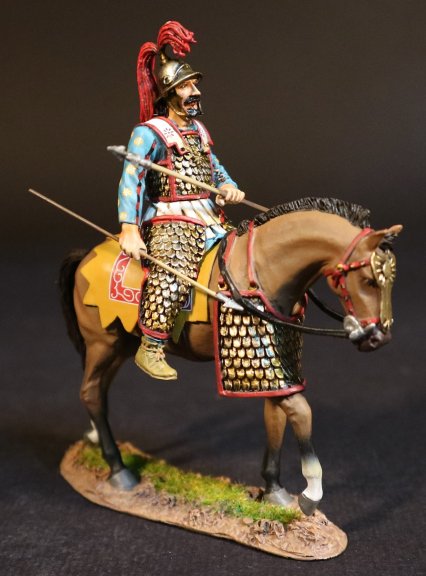
The Achaemenid Empire c. 550–330 BC, also called the First Persian Empire, was an ancient Iranian empire based in Western Asia founded by Cyrus the Great. Ranging at its greatest extent from the Balkans in the west to the Indus Valley in the east, it was larger than any previous empire in history, spanning 5.5 (or 8) million square kilometers. Incorporating various peoples of different origins and faiths, it is notable for its successful model of a centralised, bureaucratic administration (through satraps under the King of Kings), for building infrastructure such as road systems and a postal system, the use of an official language across its territories, and the development of civil services and a large professional army. The empire's successes inspired similar systems in later empires.
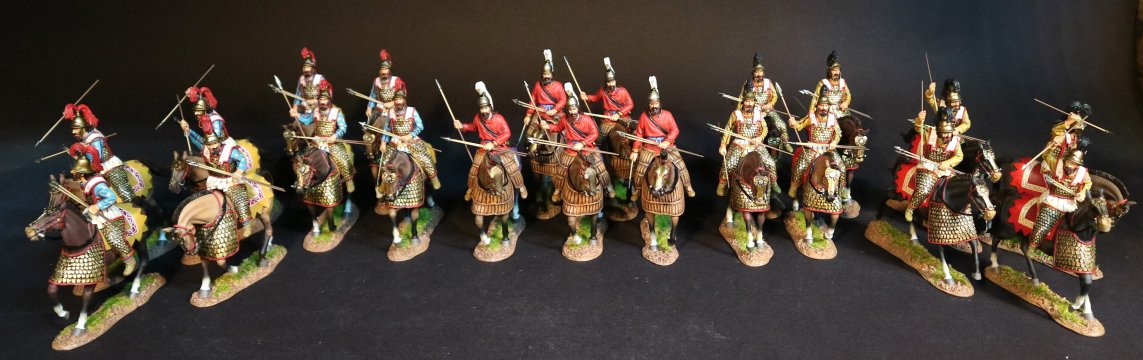
The Achaemenid Empire encompassed a vast and diverse range of territories, from Anatolia and Egypt to the Indus Valley. This diversity was reflected in its cavalry, which included units from various ethnic groups such as Medes, Persians, Bactrians, Scythians, and Sakas.
Each group brought its own unique style of cavalry warfare, contributing to the overall effectiveness of the Achaemenid cavalry.
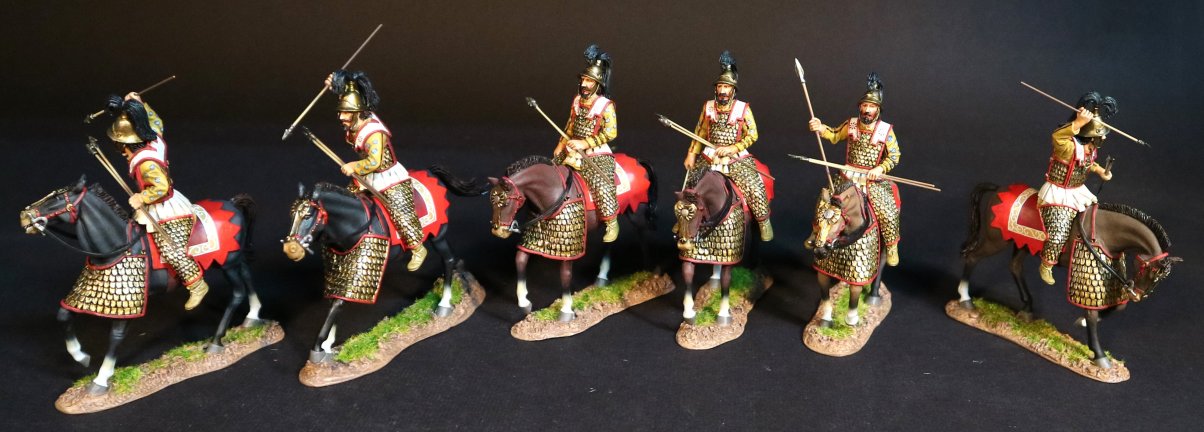
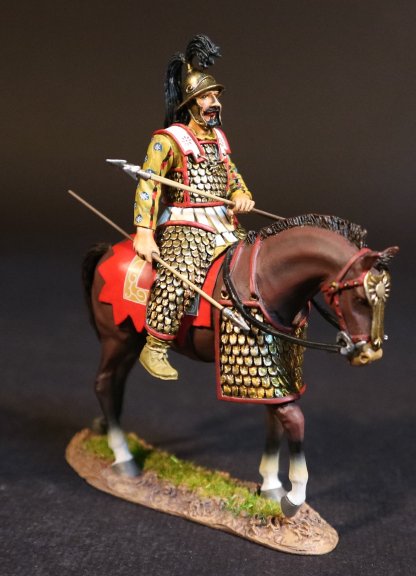
AP-71A
ARMIES AND ENEMIES OF GREECE AND MACEDONIA,
THE ACHAEMENID PERSIAN EMPIRE,
PERSIAN HEAVY CAVALRY
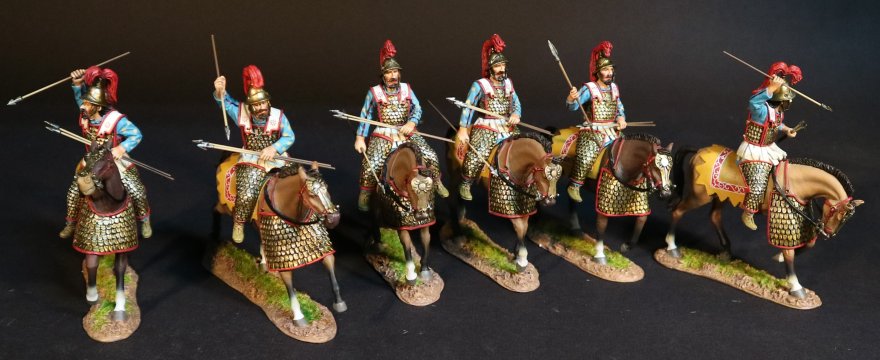
AP-71B
ARMIES AND ENEMIES OF GREECE AND MACEDONIA,
THE ACHAEMENID PERSIAN EMPIRE,
PERSIAN HEAVY CAVALRY
ARMIES AND ENEMIES OF GREECE AND MACEDONIA
MACEDONIAN PRODROMOI/SARISSOPHOROI
In ancient Greece the Prodromoi were skirmisher light cavalry. The translation can best be represented by “runners-before”, or “runners ahead”. This implies that these cavalry moved before the rest of the army and can best be described as intended for scouting and screening missions.
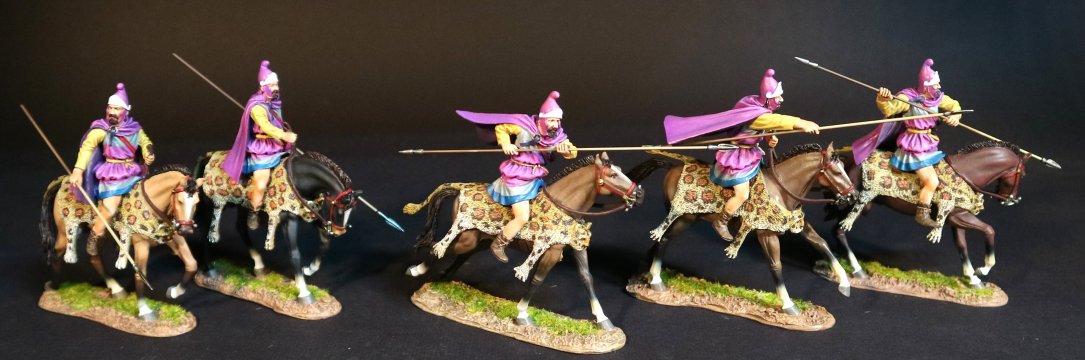
In the Macedonian army of Philip II and Alexander the Great, the cavalry unit termed as Prodromoi are sometimes referred to as Sarissophoroi, which translates as “pikemen”, or “lancers”.
This leads to the conclusion that they were armed with an uncommonly long ”xyston”. Which is believed to be as much as 14 ft long.
It is recorded that they acted as scouts reconnoitring in front of the army when it was on the march. In battle, they were used in a shock role to protect the right flank of the Companion cavalry.
After the Battle of Gaugamela, the Persian light cavalry were to take over the role of scouting duties, leaving the Macedonian Prodromoi to then assume a purely battlefield role as shock cavalry.
At the Battle of Gaugamela, the Prodromoi under Aretes were responsible for finally routing the Persian left wing cavalry, winning the battle in this sector.
Aretas was to replace Protomachus as the commander of the Prodromii, and at Gaugamela they were to break the Massagetae heavy cavalry, with Aretes personally killing their leader.
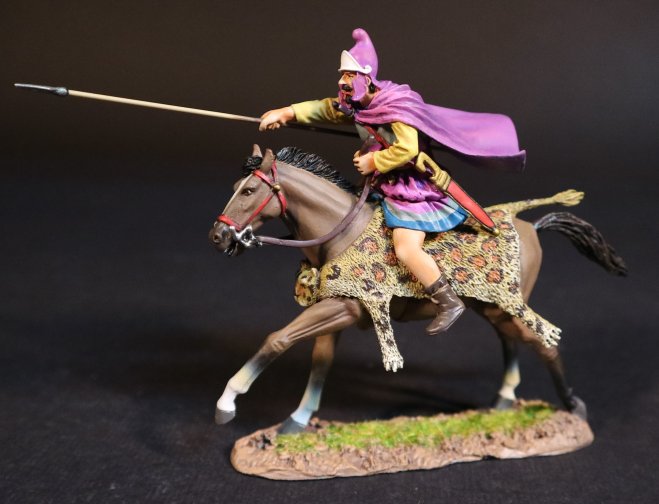
MAC-44
ARMIES AND ENEMIES OF ANCIENT GREECE AND MACEDONIA,
THE MACEDONIANS,
MACEDONIAN PRODROMOI
THE SAMNITES
The Samnites and their relatives in central and south Italy are known as Oscans, from the name of their language.
The Samnites were the largest and most important Oscan nation, and was made up of a league of four tribes, the Pentri, Caudidi, Hirpini and Caraceni.
The Samnites fought a series of wars with Rome from 343 to 272, and were by far Rome’s most formidable Italian foe. Many Samnites were later to join Hannibal.
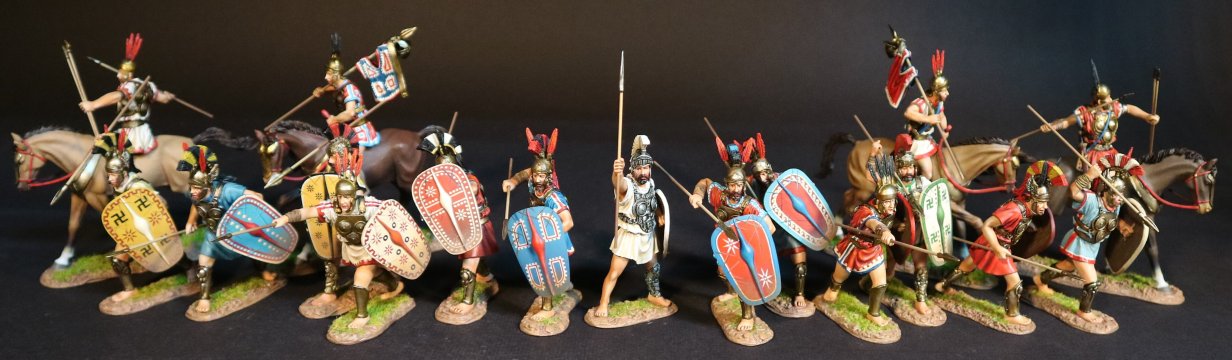
Livy the early Roman historian states that the Samnites fought in a loose phalanx formation in the form of a square, which was tactically flexible and more suited to their hilly terrain.
The Greek style phalanx was a formidable weapon especially from the front. But it was not flexible and once in contact with the enemy was vulnerable on its unprotected flanks and rear. It also need level, open terrain for its cohesion. The Romans had used the Phalanx to great effect along the coastal plains, but war in the constricted terrain of the mountainous spine of central Italy meant the Roman phalanx was a failure. The Samnites did well in mobile warfare and were well used to mountain ambushes.
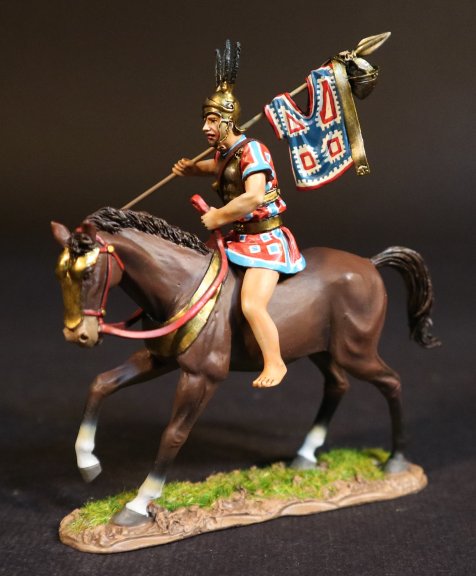
CTSM-14A
ARMIES AND ENEMIES OF ANCIENT ROME,
THE SAMNITES,
SAMNITE STANDARD BEARER
Samnite tunics were brightly coloured and decorated, and there is little evidence of uniformity.
Their weapons included the javelin and short spear. There was a mixture of oval and round shields, and many infantry wore a distinctive cuirasse of Italian design. Small breast and backplates of leather backed bronze linked by hinged straps of similar construction passing over the shoulders and under the arms. The commonest type was the triple disc style.
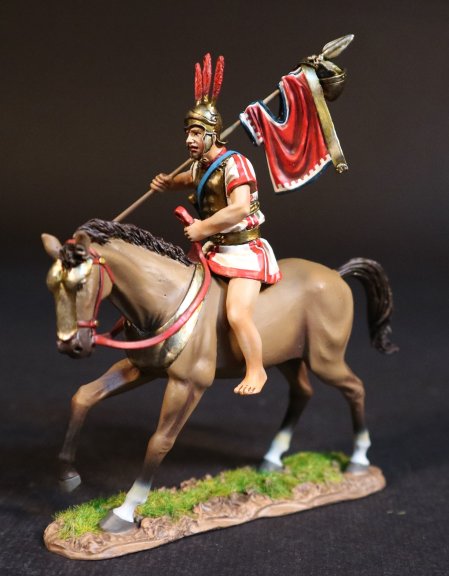
CTSM-14B
ARMIES AND ENEMIES OF ANCIENT ROME,
THE SAMNITES,
SAMNITE STANDARD BEARER
The proportion of cavalry fielded is never mentioned in historical references, but it is assumed it was low, as the wooded mountains would not have been good cavalry country. Like the Romans the Samnite cavalry were organized into Turmae.
Many paintings show warriors carrying spears over their shoulders with bright cloths hanging from them. These are often interpreted as flags, but it is believed that they were tunics and belts. These represent trophies taken from the dead or captured enemy who had been stripped, which was a common practice in both Italy and Greece.
**PLEASE CONTACT YOUR LOCAL DEALER TO PLACE YOUR PRE-ORDERS**
ARMIES AND ENEMIES OF GREECE AND MACEDONIA
THE ACHAEMENID PERSIAN ARMY
PERSIAN HEAVY CAVALRY
The Achaemenid Empire c. 550–330 BC, also called the First Persian Empire, was an ancient Iranian empire based in Western Asia founded by Cyrus the Great. Ranging at its greatest extent from the Balkans in the west to the Indus Valley in the east, it was larger than any previous empire in history, spanning 5.5 (or 8) million square kilometers. Incorporating various peoples of different origins and faiths, it is notable for its successful model of a centralised, bureaucratic administration (through satraps under the King of Kings), for building infrastructure such as road systems and a postal system, the use of an official language across its territories, and the development of civil services and a large professional army. The empire's successes inspired similar systems in later empires.
The Achaemenid Empire encompassed a vast and diverse range of territories, from Anatolia and Egypt to the Indus Valley. This diversity was reflected in its cavalry, which included units from various ethnic groups such as Medes, Persians, Bactrians, Scythians, and Sakas.
Each group brought its own unique style of cavalry warfare, contributing to the overall effectiveness of the Achaemenid cavalry.
AP-71A
ARMIES AND ENEMIES OF GREECE AND MACEDONIA,
THE ACHAEMENID PERSIAN EMPIRE,
PERSIAN HEAVY CAVALRY
AP-71B
ARMIES AND ENEMIES OF GREECE AND MACEDONIA,
THE ACHAEMENID PERSIAN EMPIRE,
PERSIAN HEAVY CAVALRY
ARMIES AND ENEMIES OF GREECE AND MACEDONIA
MACEDONIAN PRODROMOI/SARISSOPHOROI
In ancient Greece the Prodromoi were skirmisher light cavalry. The translation can best be represented by “runners-before”, or “runners ahead”. This implies that these cavalry moved before the rest of the army and can best be described as intended for scouting and screening missions.
In the Macedonian army of Philip II and Alexander the Great, the cavalry unit termed as Prodromoi are sometimes referred to as Sarissophoroi, which translates as “pikemen”, or “lancers”.
This leads to the conclusion that they were armed with an uncommonly long ”xyston”. Which is believed to be as much as 14 ft long.
It is recorded that they acted as scouts reconnoitring in front of the army when it was on the march. In battle, they were used in a shock role to protect the right flank of the Companion cavalry.
After the Battle of Gaugamela, the Persian light cavalry were to take over the role of scouting duties, leaving the Macedonian Prodromoi to then assume a purely battlefield role as shock cavalry.
At the Battle of Gaugamela, the Prodromoi under Aretes were responsible for finally routing the Persian left wing cavalry, winning the battle in this sector.
Aretas was to replace Protomachus as the commander of the Prodromii, and at Gaugamela they were to break the Massagetae heavy cavalry, with Aretes personally killing their leader.
MAC-44
ARMIES AND ENEMIES OF ANCIENT GREECE AND MACEDONIA,
THE MACEDONIANS,
MACEDONIAN PRODROMOI
THE SAMNITES
The Samnites and their relatives in central and south Italy are known as Oscans, from the name of their language.
The Samnites were the largest and most important Oscan nation, and was made up of a league of four tribes, the Pentri, Caudidi, Hirpini and Caraceni.
The Samnites fought a series of wars with Rome from 343 to 272, and were by far Rome’s most formidable Italian foe. Many Samnites were later to join Hannibal.
Livy the early Roman historian states that the Samnites fought in a loose phalanx formation in the form of a square, which was tactically flexible and more suited to their hilly terrain.
The Greek style phalanx was a formidable weapon especially from the front. But it was not flexible and once in contact with the enemy was vulnerable on its unprotected flanks and rear. It also need level, open terrain for its cohesion. The Romans had used the Phalanx to great effect along the coastal plains, but war in the constricted terrain of the mountainous spine of central Italy meant the Roman phalanx was a failure. The Samnites did well in mobile warfare and were well used to mountain ambushes.
CTSM-14A
ARMIES AND ENEMIES OF ANCIENT ROME,
THE SAMNITES,
SAMNITE STANDARD BEARER
Samnite tunics were brightly coloured and decorated, and there is little evidence of uniformity.
Their weapons included the javelin and short spear. There was a mixture of oval and round shields, and many infantry wore a distinctive cuirasse of Italian design. Small breast and backplates of leather backed bronze linked by hinged straps of similar construction passing over the shoulders and under the arms. The commonest type was the triple disc style.
CTSM-14B
ARMIES AND ENEMIES OF ANCIENT ROME,
THE SAMNITES,
SAMNITE STANDARD BEARER
The proportion of cavalry fielded is never mentioned in historical references, but it is assumed it was low, as the wooded mountains would not have been good cavalry country. Like the Romans the Samnite cavalry were organized into Turmae.
Many paintings show warriors carrying spears over their shoulders with bright cloths hanging from them. These are often interpreted as flags, but it is believed that they were tunics and belts. These represent trophies taken from the dead or captured enemy who had been stripped, which was a common practice in both Italy and Greece.
**PLEASE CONTACT YOUR LOCAL DEALER TO PLACE YOUR PRE-ORDERS**