


- Joined
- Feb 2, 2011
- Messages
- 2,489
NEW RELEASES FOR MAY 2026
THE SECOND WORLD WAR
GERMAN ARMOUR
On 10 May 1940, Germany launched its long-anticipated offensive in Western Europe, striking simultaneously into the Netherlands, Belgium, Luxembourg, and France. This campaign demonstrated the full maturity of Germany’s revolutionary method of warfare, dubbed Blitzkrieg or “Lightning War.” While the Allies had prepared for a repeat of the static trench warfare of the First World War, German forces instead unleashed fast-moving, highly coordinated armored spearheads that bypassed strongpoints, penetrated deep into enemy territory, and disrupted command and supply networks. Nowhere was this more evident than in the daring advance through the Ardennes Forest, a region the Allies had considered impassable to large armored formations.
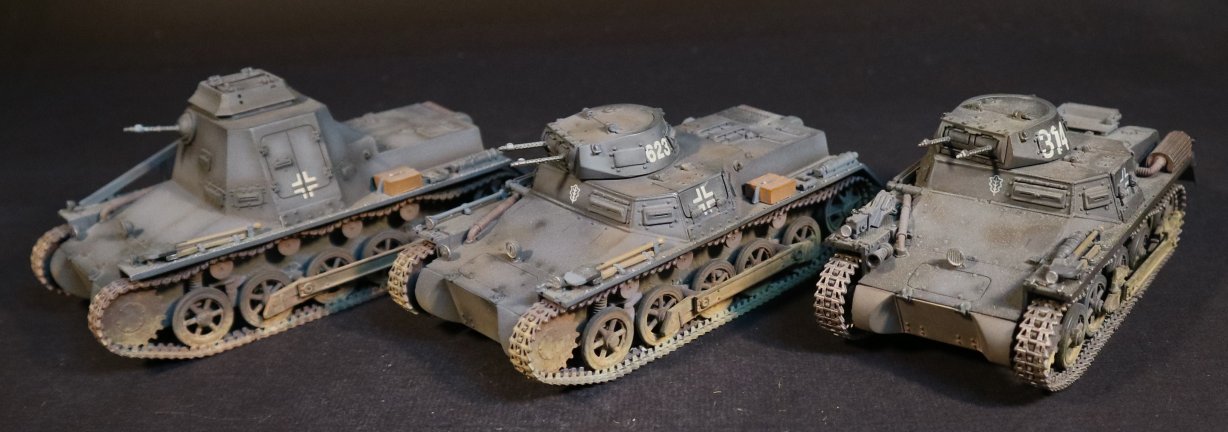
The German plan for the 1940 campaign, known as Fall Gelb (Case Yellow), relied on deception and concentration of force. While Allied armies moved north into Belgium to meet the anticipated main German thrust, the true Schwerpunkt (point of main effort) was delivered farther south through the Ardennes. Panzer divisions, including the veteran 1. Panzer-Division (1. Pz.Div.), surged westward, crossing the Meuse River and rapidly breaking into the French rear areas. Once the breakthrough was achieved, German armored units advanced with astonishing speed toward the English Channel, effectively encircling large portions of the British Expeditionary Force and French armies in Belgium. This maneuver culminated in the encirclement at Dunkirk, forcing a massive Allied evacuation and sealing the fate of the campaign.
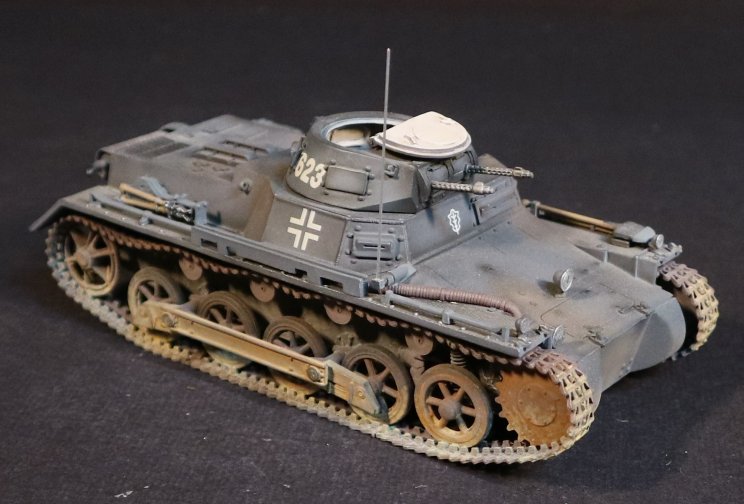
GA-14B
THE SECOND WORLD WAR,
GERMAN ARMOUR,
Panzer I Ausf. B #623,
1. Panzer-Division, XIX. Armeekorps, Heeresgruppe A
France and the Low Countries, May 1940
The success of the German offensive in the Low Countries and France was not due to superior tank design, as many German panzers were lightly armored and armed compared to their Allied counterparts. Rather, it was the doctrine, leadership, and organization of the Panzer divisions that proved decisive. German armored units operated as integrated combined arms formations, coordinating tanks, motorized infantry, artillery, engineers, and close air support under unified command. This flexibility allowed commanders to exploit opportunities rapidly, maintain momentum, and adapt to battlefield conditions in real time…capabilities their opponents struggled to match.
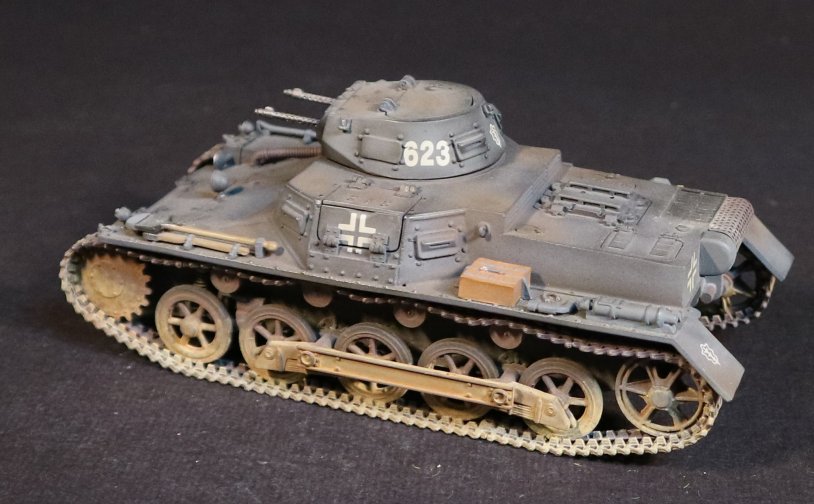
The Panzer I Ausf. B was a follow-on design to the Panzer I Ausf. A and addressed some of its predecessor’s shortcomings by incorporating a more powerful engine. This redesign required a slightly lengthened hull and an additional road wheel. The Ausf. B offered improved performance and endurance, but its thin armor left it proof against only small arms. Consequently, the Panzer I Ausf. B was vulnerable to any Polish anti-tank weapon, anti-tank rifles, and even heavy machine guns. Additionally, its armament of tin 7.92 mm MG-15 machineguns were only effective against infantry, cavalry, or light vehicles. Despite these deficiencies, when employed en masse and in close coordination with Stuka dive-bombers providing close air support, the Panzer I proved itself capable of overwhelming enemy units. It was this close cooperation of combined arms units, including massed panzers, that led to the success of Germany’s new armored doctrine, and not because of any technical superiority of early-war German tanks.
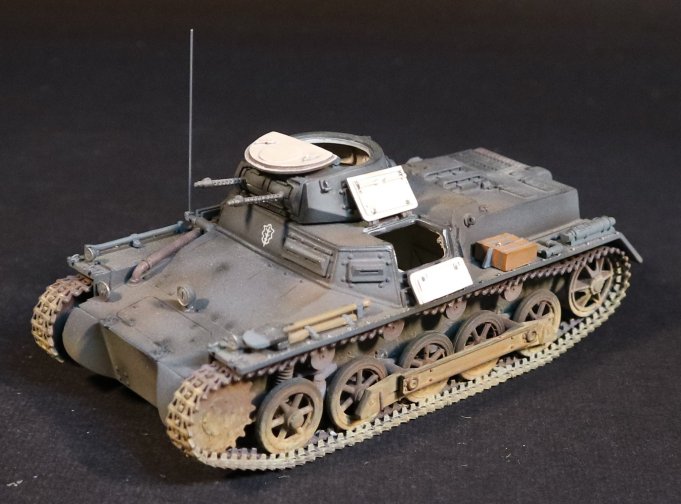
The John Jenkins Designs Panzer I Ausf. B #632 represents a tank from the 1. Pz. Div. Formed in 1935 as one of the original three Panzer divisions, it was commanded in the summer of 1940 by Generalleutnant Friedrich Kirchner and assigned to Guderian’s XIX. Armeekorps, the 1. Pz.Div. was a critical part of Army Group A's armored thrust through the Ardennes. Rapidly moving through dense terrain, the 1. Pz.Div. covered over 200km and reached the Meuse river defenses by 12 May. On 13 May, the division executed the central crossing of the Meuse at Glaire, north of Sedan. Despite fierce resistance from French 71st Division troops entrenched on the western bank, the division secured a bridgehead by evening, with engineers rapidly constructing pontoon bridges to ferry armored units across amid ongoing counter-fire. Kirchner himself personally directed operations from forward positions, emphasizing aggressive exploitation of the breakthrough. On 14 May, the division expanded the bridgehead and fought off counterattacks from the French X Corps. Subsequently the 1. Pz. Div. pivoted westward, advancing through the Ardennes gap alongside the 2. Pz.Div. and 10. Pz.Div., shattering the French 9th Army's cohesion and advancing over 200 kilometers in five days to reach the English Channel near Abbeville by 20 May, completing the encirclement of Allied forces in Belgium. 1. Pz.Div. then thrust toward Dunkirk. Although elements of the division reached the Aa Canal just 15 miles from the port by late May, operations were halted per Führer Directive 12 on 24 May, allowing the Allied evacuation that saved the majority of British Expeditionary Forces and allowed the British to continue the war.
The JJD Panzer I Ausf. B is in markings representative of the 1. Panzer-Division during the 1940 campaign in France and the Low Countries, and sports the famous white oak leaf insignia of the division. This model captures the appearance of German panzers at the height of Blitzkrieg’s early success. Whether displayed as a standalone piece or alongside other early-war German armor, it is ideal for collectors seeking to recreate scenes from one of the most successful campaigns of the Second World War.
As standard for all John Jenkins Designs tank models, the Panzer I Ausf. B #632 comes with the following features:
GA-16
THE SECOND WORLD WAR,
GERMAN ARMOUR,
kleiner Panzerbefehlswagen (Sd.Kfz. 265)
1. Panzer-Division, XIX. Armeekorps, Heeresgruppe A
France and the Low Countries, May 1940
On 10 May 1940, Germany launched its long-anticipated offensive in Western Europe, striking simultaneously into the Netherlands, Belgium, Luxembourg, and France. This campaign demonstrated the full maturity of Germany’s revolutionary method of warfare, dubbed Blitzkrieg or “Lightning War.” While the Allies had prepared for a repeat of the static trench warfare of the First World War, German forces instead unleashed fast-moving, highly coordinated armored spearheads that bypassed strongpoints, penetrated deep into enemy territory, and disrupted command and supply networks. Nowhere was this more evident than in the daring advance through the Ardennes Forest, a region the Allies had considered impassable to large armored formations.
The German plan for the 1940 campaign, known as Fall Gelb (Case Yellow), relied on deception and concentration of force. While Allied armies moved north into Belgium to meet the anticipated main German thrust, the true Schwerpunkt (point of main effort) was delivered farther south through the Ardennes. Panzer divisions, including the veteran 1. Panzer-Division (1. Pz.Div.), surged westward, crossing the Meuse River and rapidly breaking into the French rear areas. Once the breakthrough was achieved, German armored units advanced with astonishing speed toward the English Channel, effectively encircling large portions of the British Expeditionary Force and French armies in Belgium. This maneuver culminated in the encirclement at Dunkirk, forcing a massive Allied evacuation and sealing the fate of the campaign.
The success of the German offensive in the Low Countries and France was not due to superior tank design, as many German panzers were lightly armored and armed compared to their Allied counterparts. Rather, it was the doctrine, leadership, and organization of the Panzer divisions that proved decisive. German armored units operated as integrated combined arms formations, coordinating tanks, motorized infantry, artillery, engineers, and close air support under unified command. This flexibility allowed commanders to exploit opportunities rapidly, maintain momentum, and adapt to battlefield conditions in real time…capabilities their opponents struggled to match.
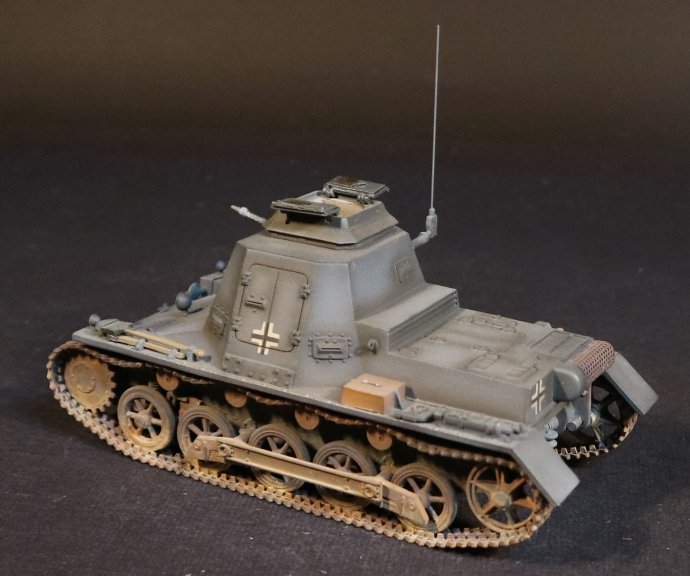
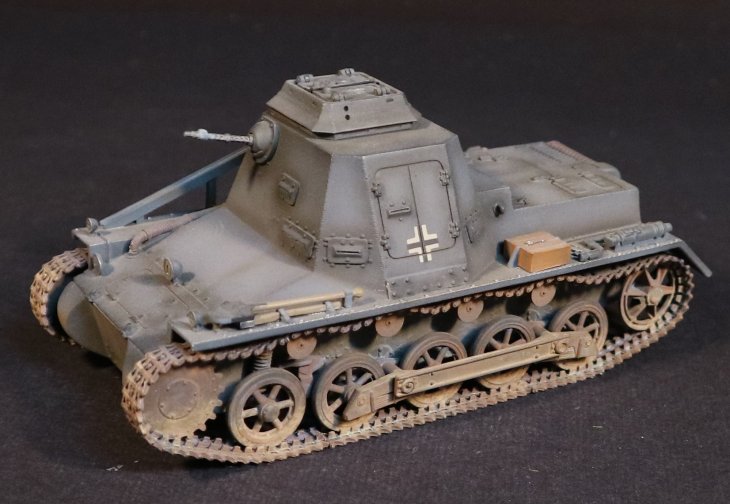
A critical component of this command and control system was the widespread use of radio communication in every German tank. At the heart of this network was the Sd.Kfz. 265 kleiner Panzerbefehlswagen (small armored command vehicle). Built on the Panzer I Ausf. B chassis, the kleiner Panzerbefehlswagen replaced the turret with a fixed superstructure housing advanced radio equipment, including a Fu 6 receiver and a powerful transmitter capable of maintaining communication across several kilometers. This allowed commanders at all levels, from platoon to regiment, to coordinate maneuvers, call for support, and respond instantly to changing battlefield conditions.
The kleiner Panzerbefehlswagen also featured an MG-34 machine gun mounted in the superstructure for close defense, ensuring that command vehicles could operate near the front lines alongside combat units. Its prominent frame antenna made it instantly recognizable on the battlefield, symbolizing its crucial role as the nerve center of Panzer operations.
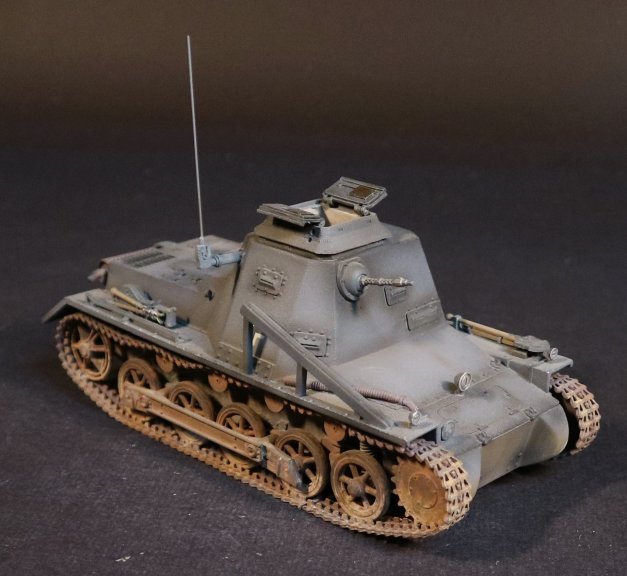
The JJD kleiner Panzerbefehlswagen represents a command tank from the 1. Pz. Div. Formed in 1935 as one of the original three Panzer divisions, it was commanded in the summer of 1940 by Generalleutnant Friedrich Kirchner and assigned to Guderian’s XIX. Armeekorps, the 1. Pz.Div. was a critical part of Army Group A's armored thrust through the Ardennes. Rapidly moving through dense terrain, the 1. Pz.Div. covered over 200km and reached the Meuse river defenses by 12 May. On 13 May, the division executed the central crossing of the Meuse at Glaire, north of Sedan. Despite fierce resistance from French 71st Division troops entrenched on the western bank, the division secured a bridgehead by evening, with engineers rapidly constructing pontoon bridges to ferry armored units across amid ongoing counter-fire. Kirchner himself personally directed operations from forward positions, emphasizing aggressive exploitation of the breakthrough. On 14 May, the division expanded the bridgehead and fought off counterattacks from the French X Corps. Subsequently the 1. Pz. Div. pivoted westward, advancing through the Ardennes gap alongside the 2. Pz.Div. and 10. Pz.Div., shattering the French 9th Army's cohesion and advancing over 200 kilometers in five days to reach the English Channel near Abbeville by 20 May, completing the encirclement of Allied forces in Belgium. 1. Pz.Div. then thrust toward Dunkirk. Although elements of the division reached the Aa Canal just 15 miles from the port by late May, operations were halted per Führer Directive 12 on 24 May, allowing the Allied evacuation that saved the majority of British Expeditionary Forces and allowed the British to continue the war.
JJ Designs is proud to present the kleiner Panzerbefehlswagen in markings representative of the 1. Panzer-Division during the 1940 campaign in France and the Low Countries. This model captures the appearance of German armoured command vehicles at the height of Blitzkrieg’s early success. Whether displayed as a standalone piece or alongside other early-war German armour, it is ideal for collectors seeking to recreate scenes from one of the most successful campaigns of the Second World War.
As standard for all JJ Designs tank models, the kleiner Panzerbefehlswagen comes with the following features:
Once again, a big thank you to, Steve “The Foreign Expert” (Hunter Rose)
Please Contact your Dealer to pre-order!
THE SECOND WORLD WAR
GERMAN ARMOUR
On 10 May 1940, Germany launched its long-anticipated offensive in Western Europe, striking simultaneously into the Netherlands, Belgium, Luxembourg, and France. This campaign demonstrated the full maturity of Germany’s revolutionary method of warfare, dubbed Blitzkrieg or “Lightning War.” While the Allies had prepared for a repeat of the static trench warfare of the First World War, German forces instead unleashed fast-moving, highly coordinated armored spearheads that bypassed strongpoints, penetrated deep into enemy territory, and disrupted command and supply networks. Nowhere was this more evident than in the daring advance through the Ardennes Forest, a region the Allies had considered impassable to large armored formations.
The German plan for the 1940 campaign, known as Fall Gelb (Case Yellow), relied on deception and concentration of force. While Allied armies moved north into Belgium to meet the anticipated main German thrust, the true Schwerpunkt (point of main effort) was delivered farther south through the Ardennes. Panzer divisions, including the veteran 1. Panzer-Division (1. Pz.Div.), surged westward, crossing the Meuse River and rapidly breaking into the French rear areas. Once the breakthrough was achieved, German armored units advanced with astonishing speed toward the English Channel, effectively encircling large portions of the British Expeditionary Force and French armies in Belgium. This maneuver culminated in the encirclement at Dunkirk, forcing a massive Allied evacuation and sealing the fate of the campaign.
GA-14B
THE SECOND WORLD WAR,
GERMAN ARMOUR,
Panzer I Ausf. B #623,
1. Panzer-Division, XIX. Armeekorps, Heeresgruppe A
France and the Low Countries, May 1940
The success of the German offensive in the Low Countries and France was not due to superior tank design, as many German panzers were lightly armored and armed compared to their Allied counterparts. Rather, it was the doctrine, leadership, and organization of the Panzer divisions that proved decisive. German armored units operated as integrated combined arms formations, coordinating tanks, motorized infantry, artillery, engineers, and close air support under unified command. This flexibility allowed commanders to exploit opportunities rapidly, maintain momentum, and adapt to battlefield conditions in real time…capabilities their opponents struggled to match.
The Panzer I Ausf. B was a follow-on design to the Panzer I Ausf. A and addressed some of its predecessor’s shortcomings by incorporating a more powerful engine. This redesign required a slightly lengthened hull and an additional road wheel. The Ausf. B offered improved performance and endurance, but its thin armor left it proof against only small arms. Consequently, the Panzer I Ausf. B was vulnerable to any Polish anti-tank weapon, anti-tank rifles, and even heavy machine guns. Additionally, its armament of tin 7.92 mm MG-15 machineguns were only effective against infantry, cavalry, or light vehicles. Despite these deficiencies, when employed en masse and in close coordination with Stuka dive-bombers providing close air support, the Panzer I proved itself capable of overwhelming enemy units. It was this close cooperation of combined arms units, including massed panzers, that led to the success of Germany’s new armored doctrine, and not because of any technical superiority of early-war German tanks.
The John Jenkins Designs Panzer I Ausf. B #632 represents a tank from the 1. Pz. Div. Formed in 1935 as one of the original three Panzer divisions, it was commanded in the summer of 1940 by Generalleutnant Friedrich Kirchner and assigned to Guderian’s XIX. Armeekorps, the 1. Pz.Div. was a critical part of Army Group A's armored thrust through the Ardennes. Rapidly moving through dense terrain, the 1. Pz.Div. covered over 200km and reached the Meuse river defenses by 12 May. On 13 May, the division executed the central crossing of the Meuse at Glaire, north of Sedan. Despite fierce resistance from French 71st Division troops entrenched on the western bank, the division secured a bridgehead by evening, with engineers rapidly constructing pontoon bridges to ferry armored units across amid ongoing counter-fire. Kirchner himself personally directed operations from forward positions, emphasizing aggressive exploitation of the breakthrough. On 14 May, the division expanded the bridgehead and fought off counterattacks from the French X Corps. Subsequently the 1. Pz. Div. pivoted westward, advancing through the Ardennes gap alongside the 2. Pz.Div. and 10. Pz.Div., shattering the French 9th Army's cohesion and advancing over 200 kilometers in five days to reach the English Channel near Abbeville by 20 May, completing the encirclement of Allied forces in Belgium. 1. Pz.Div. then thrust toward Dunkirk. Although elements of the division reached the Aa Canal just 15 miles from the port by late May, operations were halted per Führer Directive 12 on 24 May, allowing the Allied evacuation that saved the majority of British Expeditionary Forces and allowed the British to continue the war.
The JJD Panzer I Ausf. B is in markings representative of the 1. Panzer-Division during the 1940 campaign in France and the Low Countries, and sports the famous white oak leaf insignia of the division. This model captures the appearance of German panzers at the height of Blitzkrieg’s early success. Whether displayed as a standalone piece or alongside other early-war German armor, it is ideal for collectors seeking to recreate scenes from one of the most successful campaigns of the Second World War.
As standard for all John Jenkins Designs tank models, the Panzer I Ausf. B #632 comes with the following features:
- Opening commander’s hatch
- Antenna can be raised or lowered
- Historically accurate paint job and markings
- Detailed crew compartment
GA-16
THE SECOND WORLD WAR,
GERMAN ARMOUR,
kleiner Panzerbefehlswagen (Sd.Kfz. 265)
1. Panzer-Division, XIX. Armeekorps, Heeresgruppe A
France and the Low Countries, May 1940
On 10 May 1940, Germany launched its long-anticipated offensive in Western Europe, striking simultaneously into the Netherlands, Belgium, Luxembourg, and France. This campaign demonstrated the full maturity of Germany’s revolutionary method of warfare, dubbed Blitzkrieg or “Lightning War.” While the Allies had prepared for a repeat of the static trench warfare of the First World War, German forces instead unleashed fast-moving, highly coordinated armored spearheads that bypassed strongpoints, penetrated deep into enemy territory, and disrupted command and supply networks. Nowhere was this more evident than in the daring advance through the Ardennes Forest, a region the Allies had considered impassable to large armored formations.
The German plan for the 1940 campaign, known as Fall Gelb (Case Yellow), relied on deception and concentration of force. While Allied armies moved north into Belgium to meet the anticipated main German thrust, the true Schwerpunkt (point of main effort) was delivered farther south through the Ardennes. Panzer divisions, including the veteran 1. Panzer-Division (1. Pz.Div.), surged westward, crossing the Meuse River and rapidly breaking into the French rear areas. Once the breakthrough was achieved, German armored units advanced with astonishing speed toward the English Channel, effectively encircling large portions of the British Expeditionary Force and French armies in Belgium. This maneuver culminated in the encirclement at Dunkirk, forcing a massive Allied evacuation and sealing the fate of the campaign.
The success of the German offensive in the Low Countries and France was not due to superior tank design, as many German panzers were lightly armored and armed compared to their Allied counterparts. Rather, it was the doctrine, leadership, and organization of the Panzer divisions that proved decisive. German armored units operated as integrated combined arms formations, coordinating tanks, motorized infantry, artillery, engineers, and close air support under unified command. This flexibility allowed commanders to exploit opportunities rapidly, maintain momentum, and adapt to battlefield conditions in real time…capabilities their opponents struggled to match.
A critical component of this command and control system was the widespread use of radio communication in every German tank. At the heart of this network was the Sd.Kfz. 265 kleiner Panzerbefehlswagen (small armored command vehicle). Built on the Panzer I Ausf. B chassis, the kleiner Panzerbefehlswagen replaced the turret with a fixed superstructure housing advanced radio equipment, including a Fu 6 receiver and a powerful transmitter capable of maintaining communication across several kilometers. This allowed commanders at all levels, from platoon to regiment, to coordinate maneuvers, call for support, and respond instantly to changing battlefield conditions.
The kleiner Panzerbefehlswagen also featured an MG-34 machine gun mounted in the superstructure for close defense, ensuring that command vehicles could operate near the front lines alongside combat units. Its prominent frame antenna made it instantly recognizable on the battlefield, symbolizing its crucial role as the nerve center of Panzer operations.
The JJD kleiner Panzerbefehlswagen represents a command tank from the 1. Pz. Div. Formed in 1935 as one of the original three Panzer divisions, it was commanded in the summer of 1940 by Generalleutnant Friedrich Kirchner and assigned to Guderian’s XIX. Armeekorps, the 1. Pz.Div. was a critical part of Army Group A's armored thrust through the Ardennes. Rapidly moving through dense terrain, the 1. Pz.Div. covered over 200km and reached the Meuse river defenses by 12 May. On 13 May, the division executed the central crossing of the Meuse at Glaire, north of Sedan. Despite fierce resistance from French 71st Division troops entrenched on the western bank, the division secured a bridgehead by evening, with engineers rapidly constructing pontoon bridges to ferry armored units across amid ongoing counter-fire. Kirchner himself personally directed operations from forward positions, emphasizing aggressive exploitation of the breakthrough. On 14 May, the division expanded the bridgehead and fought off counterattacks from the French X Corps. Subsequently the 1. Pz. Div. pivoted westward, advancing through the Ardennes gap alongside the 2. Pz.Div. and 10. Pz.Div., shattering the French 9th Army's cohesion and advancing over 200 kilometers in five days to reach the English Channel near Abbeville by 20 May, completing the encirclement of Allied forces in Belgium. 1. Pz.Div. then thrust toward Dunkirk. Although elements of the division reached the Aa Canal just 15 miles from the port by late May, operations were halted per Führer Directive 12 on 24 May, allowing the Allied evacuation that saved the majority of British Expeditionary Forces and allowed the British to continue the war.
JJ Designs is proud to present the kleiner Panzerbefehlswagen in markings representative of the 1. Panzer-Division during the 1940 campaign in France and the Low Countries. This model captures the appearance of German armoured command vehicles at the height of Blitzkrieg’s early success. Whether displayed as a standalone piece or alongside other early-war German armour, it is ideal for collectors seeking to recreate scenes from one of the most successful campaigns of the Second World War.
As standard for all JJ Designs tank models, the kleiner Panzerbefehlswagen comes with the following features:
- Opening commander’s hatch
- Antenna can be raised or lowered
- Historically accurate paint job and markings
Once again, a big thank you to, Steve “The Foreign Expert” (Hunter Rose)
Please Contact your Dealer to pre-order!


