Darkness came.
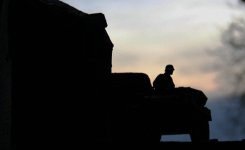
Many houses were burning. Sapper Carpenter says that,
'The area around the bridge was becoming a sea of flame. The roar and crackle of flaming buildings and dancing shadows cast by the flames was like looking into Dante's inferno.'
The towers of the two nearby churches, the Eusebius and the St Walburgis, were both on fire. A bell in one of them clanged irregularly throughout the night as it swung in the wind.
So ended the second full day at the Arnhem bridge.
Lieutenant-Colonel Frost, who had been urged to reach and hold the bridge at all costs, wondered why no such priority had apparently been given to the Nijmegen bridge, from which there was still no sign of any fighting.
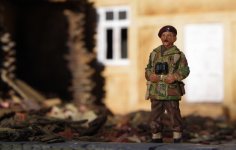
The night passed relatively quietly; dawn came up dull and with a damp drizzle. Most of the original perimeter was still held, but the British positions were now virtually split into two parts divided by the ramp. The Germans allowed stretcher-bearers to pass in the open, but all other movement was extremely dangerous.
There was no redeployment of positions; each group would fight on until its building was destroyed.
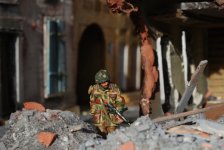
The pressure had nearly all been from the east and north until now, but the Germans started to press just as strongly from the west. Patrols sent out into the town on that side the previous day had found an absence of Germans and the high wall of the local prison on that side had partially shielded the British positions from shell fire from that quarter. But the Germans had blown a hole in the wall during the night and they started firing through it.
This development, together with the continuing German shelling from over the river, meant that the airborne positions were literally under fire from all sides and from within when the tanks cruised into the perimeter, as they would more frequently do during the day.
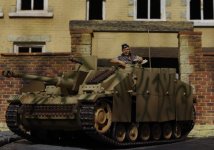
German artillery prepares to deploy ...
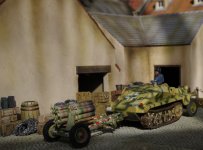
As does their armour ...