C. ‘SEKIGAHARA 1600’
In the year 1600, after 150 years of perpetual warfare, Japan’s warlords united behind two rival factions triggered by the death of the great warlord
Toyotomi Hideyoshi.
The two contenders for power were
Ishida Mitsunari and
Tokugawa leyasu. Their contest was finally settled by a huge force of arms in a small mountain valley in central Japan.
By the end of that day, on 21 October 1600, 40,000 corpses from both armies lay dead across the grass of the small valley as
Tokugawa leyasu became the undisputed master of Japan. Within three short years the Emperor himself would grant him the ultimate title he sought…
Shogun.
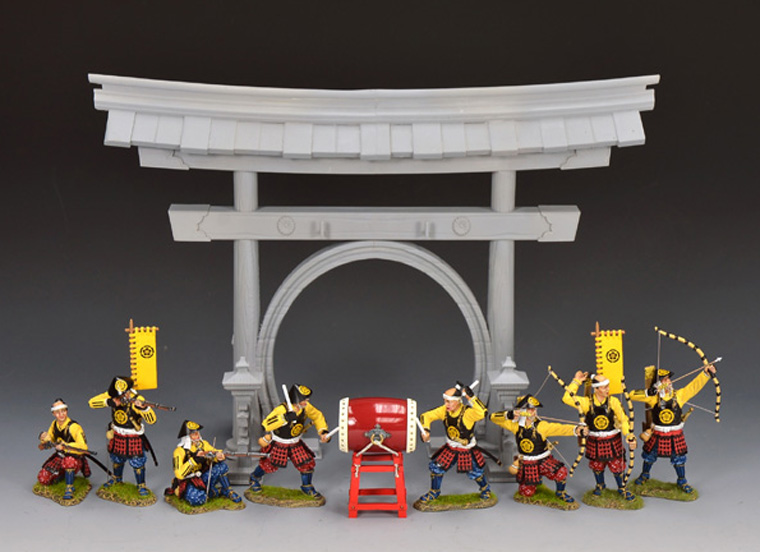
This particular battle and the warriors who fought it are the focus of this colouful new and exciting King & Country series that captures the unique military style and fighting techniques of medieval Japan alongwith the
Samurai and
Ashigaru warriors who took part in this mighty struggle.
HOW DID THIS SERIES COME ABOUT?
Back in 2005 King & Country was commissioned to design and produce a whole series of single, 1:30 scale, all-metal, hand-painted figurines of Japanese of the Samurai period by Del Prado Japan.
For the previous 5 years K&C had already been designing and producing several historical series of figures for
Del Prado in Spain.
This had begun with
‘Soldiers of the 20th Century’, a range of over 100 individual figures depicting soldiers from different armies of the world wearing the weapons, uniforms and equipment from various wars that stretched from the
Boer War in 1900 up through both
World Wars to smaller but no less bloody, conflicts in
Vietnam and
The Middle East.
Following that success we went on to develop two more successful series covering the different European armies of the
‘Napoleonic Era’… both
Infantry and
Cavalry with 120 figures in each series. After that our next Del Prado project was one K&C actually suggested to them…
‘Firemen of The World’. Like the last two series this was to comprise
120 individual
‘Firemen’ with the very first in the range to be a
New York City Fireman from the 9/11 terrorist attack in 2001.
While still working on this series one of D P’s Asian subsidiaries,
Del Prado Japan requested we work with them on a series of figures depicting Samurai warriors as well as the lesser-known ‘Ashigaru’ soldiers who were the more common and more numerous foot soldiers of that period.
Now, jump forward 20 years to 2025 when myself and my wife,
Liza went on a walking tour of central Japan with a group of friends.
Each day we would hike for 10-15km. and each evening would stop at a traditional Japanese Inn to eat and sleep in the Japanese style before beginning a different walk the next morning.
During this tour we had the opportunity to visit several amazing Japanese castles which often would have life size figures of traditional
‘Samurai’ warriors and
‘Ashigaru’ foot soldiers.
One particular castle even had
‘live’ versions of these figures walking around or standing guard for visitors to take photos with. It was truly inspiring and I was duly inspired seeing them!
While I was doing all of this I also discovered that at each of the castles we came to had
‘Gift Shops’ for visitors to purchase mementos of their visit –
Postcards, Tablemats, Drinks coasters and all kinds of nice little
‘nicknacks’ but, alas,
not one miniature figurine!?!
Once back in Hong Kong I took a closer look at what some of our competitors had produced and was nicely surprised to see some excellent figures but none that wanted to tell this story in the same way K&C want to tell it.
And so, here is the first little ‘
peek behind the kimono’ to show you what we plan on releasing.
Our simple, straight-forward concept is to offer a wide range of action figures that in the case of the rank and file
‘Ashigaru’ foot soldiers we will offer each individual figure in the different colour of the two opposing armies. A range of single
Samurai warriors and leaders will also be included in this series.
A WORD ABOUT THE ‘ASHIGARU’
In medieval Japan the great mass of low-ranking foot soldiers were known as
‘Ashigaru’ or
‘light feet’ and began to be adopted into the ranks of most feudal-period Samurai armies towards the end of the 15th century.
Very rudimentary sets of basic designs of armour known as
‘Okashi Gosuka’ or
‘Light Armour’ were often produced in bulk to be issued to these
‘warriors on foot’.
Among their primary weapons were long lances or spears called
‘Yari’ which could be as long as nine feet in length.
Other large formations of
‘Ashigaru’ were comprised almost exclusively of
‘Arquebusiers’, a matchlock predecessor of the musket and, of course,
‘Archers’.
In addition to their primary weapon virtually every
‘Ashigaru’ also carried a long sword (called a
‘Tachi’ or
‘Katana’) and sometimes also a smaller sword called a
‘wakizashi’.
Here is just the first small installment of our fighting
‘Ashigaru’ warriors belonging to the
‘Western Army’ of
Ishido Mitsunari (1560-1600).
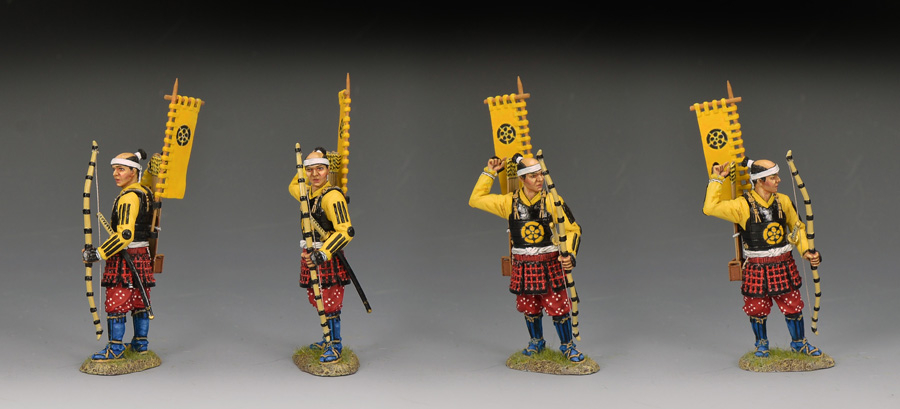
SW001 ‘Western Army ‘Ashigaru’ Archer Reaching for An Arrow’
This Ashigaru Archer wears the typical body armour of a Japanese foot soldier of this feudal period. Relatively inexpensive to produce it consisted of a simple
‘cuirass’ of lacquered metal to cover the chest and back areas. Cloth sleeves were padded with integral splints of the same metal or hardened bamboo sewn on top or the outside of the garment.
Below the waist a split armoured apron surrounded the lower body protecting the soldier’s private parts, thighs and backside. Lower down were the loose fitting leggings complete with metal or bamboo shin guards.
One of the most striking features of Japanese armour of this era was the
‘Sashimono’, a long banner worn from a cross bar and pole arrangement attached to the back of some Ashigaru’s armour. These banners were often marked with the family crest or symbol of the particular commander or Samurai leading that unit.
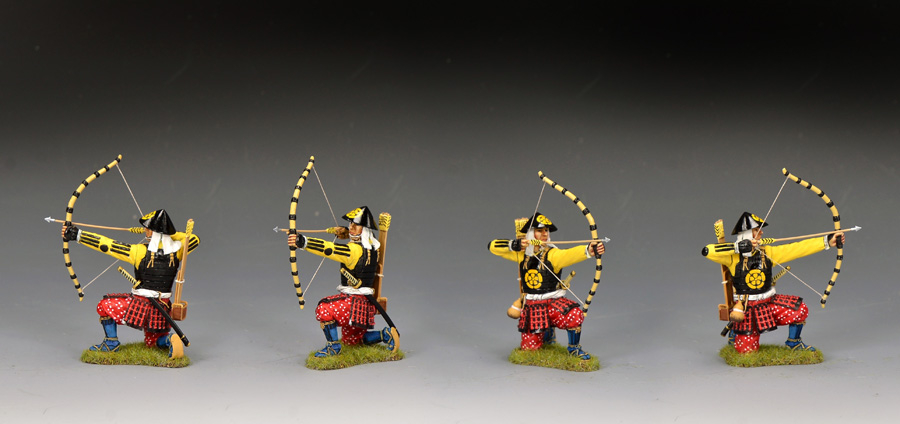
SW003 ‘Kneeling Ashigaru Archer’
Outfitted and equipped in the same manner as
SW001 this particular Archer is in addition wearing the
‘Jingasa’, the conical or bowl-shaped
“war hat” designed for combat and mass production.
These
“war hats” were typically made of lacquered iron, leather or wood and provided basic protection against downward blows and both the sun and inclement weather.
In addition, clan and unit crests would often be painted at the front of each hat which would be attached by rope or cloth chin straps to the wearer’s head.
Cloth sunscreens are also attached to each
“war hat” to shield the neck and sides of the head.
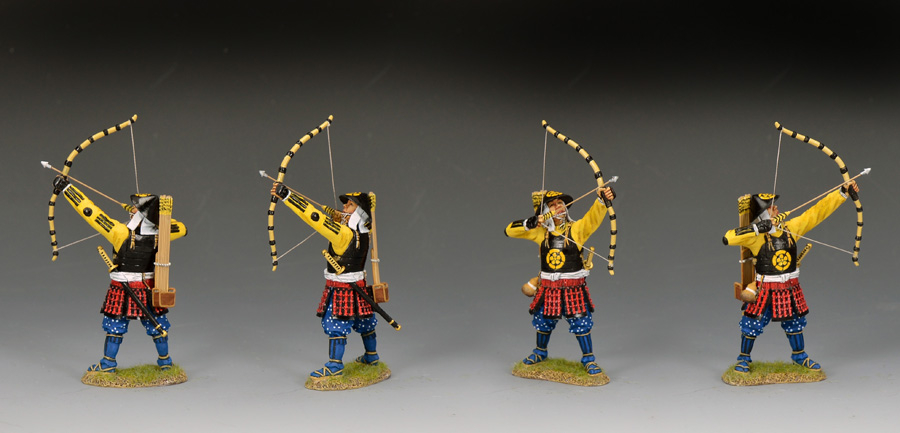
SW004 ‘Ashigaru Archer About To Launch An Arrow’
Aiming upwards this Archer is about to let fly…
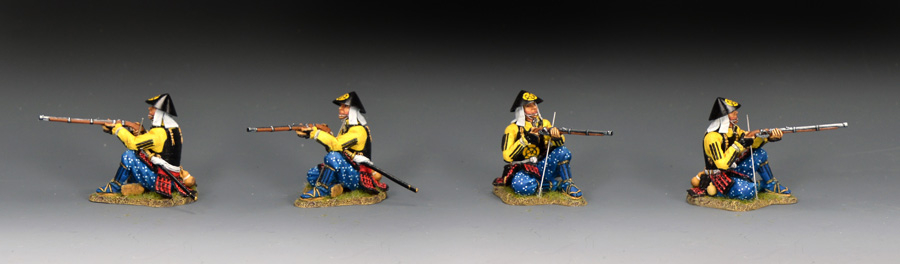
SW006 ‘Sitting Ashigaru Arquebusier’
By the year 1600 many Ashigaru were heavily equipped with
‘Tanegashima’, Japanese-made matchlock arquebuses introduced into Japan by Portuguese traders in 1543. These weapons revolutionized warfare allowing lower-class Ashigaru to train and destroy heavily armed cavalry or Samurai.
Within a few short years arquebus-armed ashigaru far outnumbered the older, traditional archers leading from a two-to-one ratio at the time of Sekigahara to a four-to-one ratio in later periods.
Archers however still had one distinctive advantage… They could fire, reload and fire once more much faster!
Our Ashigaru Arquebusier is loaded and ready to fire.
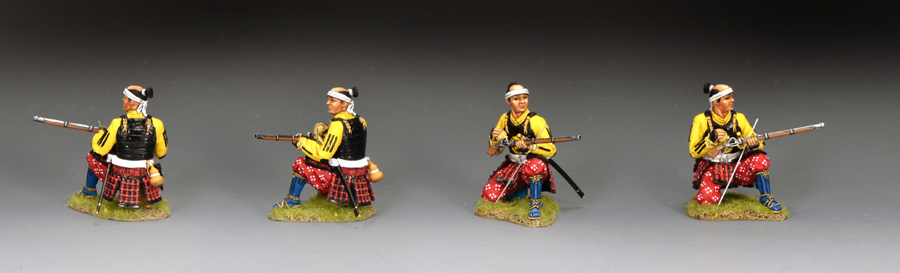
SW008 ‘Kneeling Priming Ashigaru Arquebusier’
This figure is priming his match lock mechanism with a little gunpowder in preparation to fire.
Also note the standing metal
‘ramrod’ close at hand with all three of these first Ashigaru Arquebusiers
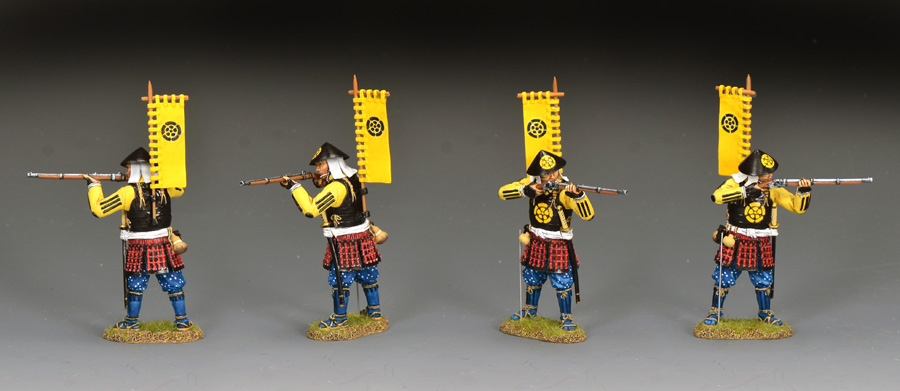
SW010 ‘Standing Firing Arquebusier’’
One of our leading Arquebusiers, complete with his
‘Sashimono’ banner, aiming at the enemy and about to open fire.
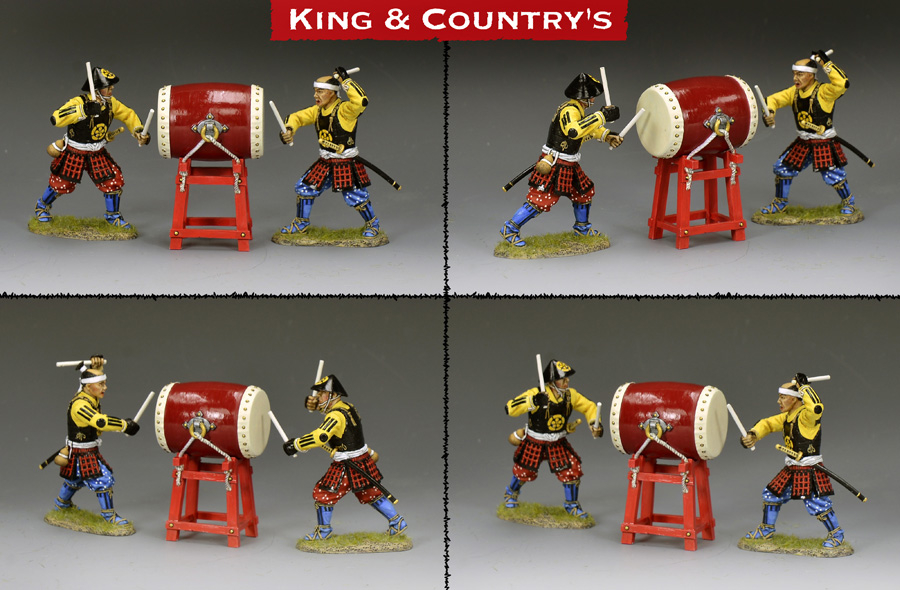
SW014 ‘Ashigaru Taiko Drum Set’
Taiko Drums are traditional Japanese barrel shaped percussion instruments ranging from small to massive sizes known for their thunderous sound and physical performance style.
With roots in ancient rituals, battle and theatre they are characterized by high energy, synchronized movement and perfect discipline.
In battle they were used to communicate between commanders and units as well as scaring the enemy.
Our spectacular and dynamic two figure team and their Taiko drum can easily sound and make their presence felt on any battlefield…
anywhere!
AVAILABLE: Mid-Late May



.jpg)
.JPG)
.JPG)
.JPG)


 . Robin.