


- Joined
- Feb 2, 2011
- Messages
- 2,441
New Releases for April 2026
ARMIES AND ENEMIES OF ANCIENT ROME
THE ROMAN ARMY OF THE MID REPUBLIC 275 – 140BC
The Roman army of the mid-Republic (also known as the manipular Roman army or the "Polybian army"), refers to the armed forces deployed by the mid-Roman Republic, from the end of the Samnite Wars (290 BC) to the end of the Social War (88 BC). The first phase of this army, in its manipular structure (290–ca. 130 BC), is described in detail in the Histories of the ancient Greek historian Polybius, writing before 146 BC.
The central feature of the mid-Republican army was the manipular organisation of its battle-line. Instead of a single, large mass (the phalanx) as in the Greek and Early Roman army, the Romans now drew up in three lines (triplex acies) consisting of small units (maniples) of 120 men, arrayed in chessboard fashion, giving much greater tactical strength and flexibility.
The velites would gather at the front, and cover the advance of the hastati. If the hastati failed to break the enemy, they would fall back on the Principes. If the principes could not break them then they would retire behind the Triarii.
This order of battle was almost always followed. It was Scipio Africanus at the Battle of The Great Plains, and the Battle of Zama, who modified this tactic.
MID REPUBLICAN ROMAN PRINCIPES

For set-piece battles, the heavy infantry were usually drawn up in three lines.
However, the vast majority of the heavy infantry were stationed in the front two lines, the HASTATI and PRINCIPES. Contained in these two lines were the younger recruits who were expected to do all the fighting. The rear line (TRIARII), was a reserve consisting of older men who formed a line of last resort to provide cover for the front lines if they were put to flight (and also to prevent unauthorised retreat by the front ranks).
The Principes (singular princeps) were originally men in the prime of their lives , who were also fairly wealthy, and could therefore afford decent equipment. These were the heavier infantry of the legion, and their usual position was the second battle line.
By the time of the Punic wars infantry were sorted into classes according to age and experience rather than wealth. The Principes then became the older veterans but their equipment and role remained the same.
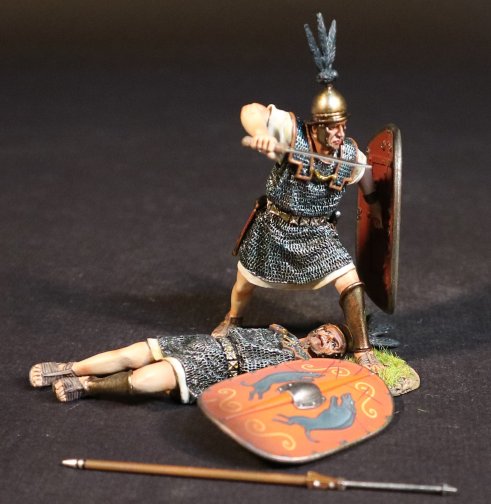
PMRR-04R
ARMIES AND ENEMIES OF ANCIENT ROME,
THE ROMAN ARMY OF THE MID REPUBLIC,
PRINCIPES
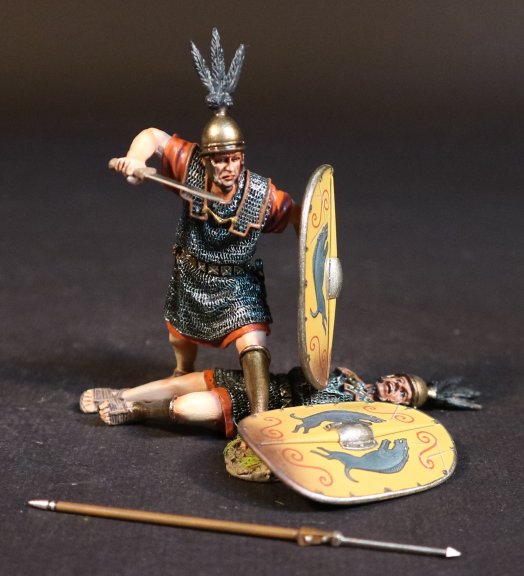
PMRR-04Y
ARMIES AND ENEMIES OF ANCIENT ROME,
THE ROMAN ARMY OF THE MID REPUBLIC,
PRINCIPES
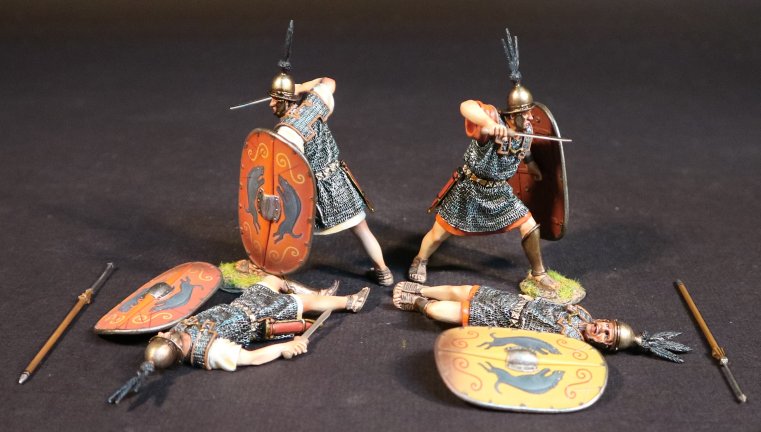
PMRR-04RYN
ARMIES AND ENEMIES OF ANCIENT ROME,
THE ROMAN ARMY OF THE MID REPUBLIC,
PRINCIPES
GLADIATORS
"HAIL, EMPEROR, THOSE WHO ARE ABOUT TO DIE SALUTE YOU."
Gladiators were armed combatants who entertained audiences in the Roman Republic and Roman Empire in violent confrontations with other gladiators, wild animals and condemned criminals.
Some gladiators were volunteers who risked their lives and their legal and social standing by appearing in the arena, but most were despised as slaves, schooled under harsh conditions, socially marginalized and even segregated even in death.
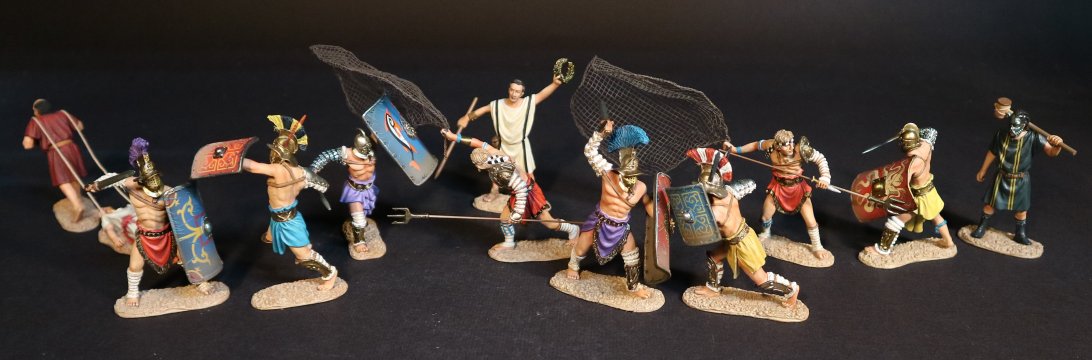
Irrespective of their origin, gladiators offered spectators an example of Rome’s martial ethics and in fighting or dying well, they could inspire admiration and popular acclaim.
They were celebrated in high and low art, and their value as entertainers was commemorated in precious and commonplace objects throughout the Roman world.
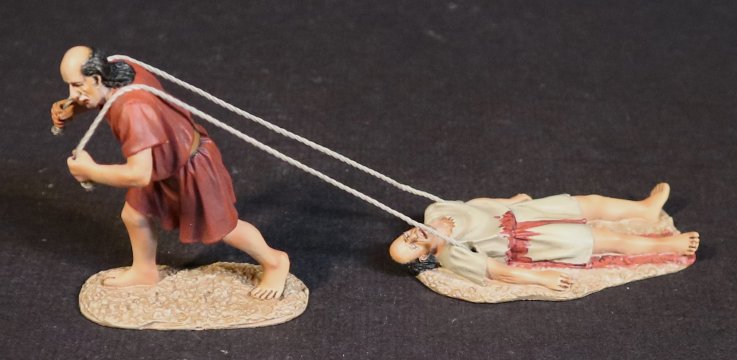
GLAD-14
GLADIATORS
"HAIL, EMPEROR, THOSE WHO ARE ABOUT TO DIE SALUTE YOU."
“TAKE OUT THE DEAD!"
**PLEASE CONTACT YOUR LOCAL DEALER TO PLACE YOUR PRE-ORDERS**
ARMIES AND ENEMIES OF ANCIENT ROME
THE ROMAN ARMY OF THE MID REPUBLIC 275 – 140BC
The Roman army of the mid-Republic (also known as the manipular Roman army or the "Polybian army"), refers to the armed forces deployed by the mid-Roman Republic, from the end of the Samnite Wars (290 BC) to the end of the Social War (88 BC). The first phase of this army, in its manipular structure (290–ca. 130 BC), is described in detail in the Histories of the ancient Greek historian Polybius, writing before 146 BC.
The central feature of the mid-Republican army was the manipular organisation of its battle-line. Instead of a single, large mass (the phalanx) as in the Greek and Early Roman army, the Romans now drew up in three lines (triplex acies) consisting of small units (maniples) of 120 men, arrayed in chessboard fashion, giving much greater tactical strength and flexibility.
The velites would gather at the front, and cover the advance of the hastati. If the hastati failed to break the enemy, they would fall back on the Principes. If the principes could not break them then they would retire behind the Triarii.
This order of battle was almost always followed. It was Scipio Africanus at the Battle of The Great Plains, and the Battle of Zama, who modified this tactic.
MID REPUBLICAN ROMAN PRINCIPES
For set-piece battles, the heavy infantry were usually drawn up in three lines.
However, the vast majority of the heavy infantry were stationed in the front two lines, the HASTATI and PRINCIPES. Contained in these two lines were the younger recruits who were expected to do all the fighting. The rear line (TRIARII), was a reserve consisting of older men who formed a line of last resort to provide cover for the front lines if they were put to flight (and also to prevent unauthorised retreat by the front ranks).
The Principes (singular princeps) were originally men in the prime of their lives , who were also fairly wealthy, and could therefore afford decent equipment. These were the heavier infantry of the legion, and their usual position was the second battle line.
By the time of the Punic wars infantry were sorted into classes according to age and experience rather than wealth. The Principes then became the older veterans but their equipment and role remained the same.
PMRR-04R
ARMIES AND ENEMIES OF ANCIENT ROME,
THE ROMAN ARMY OF THE MID REPUBLIC,
PRINCIPES
PMRR-04Y
ARMIES AND ENEMIES OF ANCIENT ROME,
THE ROMAN ARMY OF THE MID REPUBLIC,
PRINCIPES
PMRR-04RYN
ARMIES AND ENEMIES OF ANCIENT ROME,
THE ROMAN ARMY OF THE MID REPUBLIC,
PRINCIPES
GLADIATORS
"HAIL, EMPEROR, THOSE WHO ARE ABOUT TO DIE SALUTE YOU."
Gladiators were armed combatants who entertained audiences in the Roman Republic and Roman Empire in violent confrontations with other gladiators, wild animals and condemned criminals.
Some gladiators were volunteers who risked their lives and their legal and social standing by appearing in the arena, but most were despised as slaves, schooled under harsh conditions, socially marginalized and even segregated even in death.
Irrespective of their origin, gladiators offered spectators an example of Rome’s martial ethics and in fighting or dying well, they could inspire admiration and popular acclaim.
They were celebrated in high and low art, and their value as entertainers was commemorated in precious and commonplace objects throughout the Roman world.
GLAD-14
GLADIATORS
"HAIL, EMPEROR, THOSE WHO ARE ABOUT TO DIE SALUTE YOU."
“TAKE OUT THE DEAD!"
**PLEASE CONTACT YOUR LOCAL DEALER TO PLACE YOUR PRE-ORDERS**

