


- Joined
- Feb 2, 2011
- Messages
- 2,489
NEW RELEASES FOR JUNE 2026
THE ANCIENTS
ARMIES AND ENEMIES OF GREECE AND MACEDONIA
THE ACHAEMENID PERSIAN ARMY
KARDAKE INFANTRY
The Achaemenid Empire c. 550–330 BC, also called the First Persian Empire, was an ancient Iranian empire based in Western Asia founded by Cyrus the Great. Ranging at its greatest extent from the Balkans in the west to the Indus Valley in the east, it was larger than any previous empire in history, spanning 5.5 (or 8) million square kilometers. Incorporating various peoples of different origins and faiths, it is notable for its successful model of a centralised, bureaucratic administration (through satraps under the King of Kings), for building infrastructure such as road systems and a postal system, the use of an official language across its territories, and the development of civil services and a large professional army. The empire's successes inspired similar systems in later empires
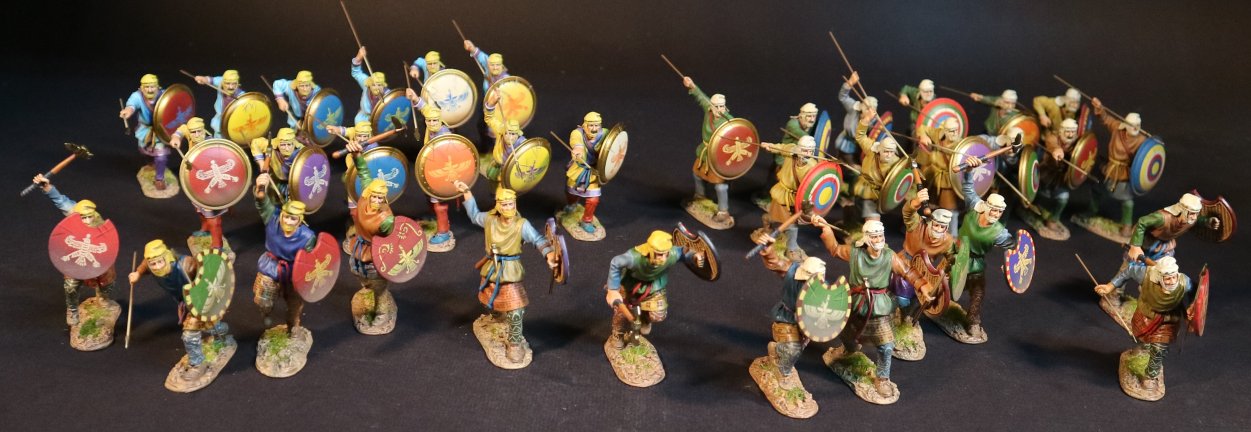
The Achaemenid Empire encompassed a vast and diverse range of territories, from Anatolia and Egypt to the Indus Valley. This diversity was reflected in its cavalry, which included units from various ethnic groups such as Medes, Persians, Bactrians, Scythians, and Sakas.
Each group brought its own unique style of cavalry warfare, contributing to the overall effectiveness of the Achaemenid cavalry.
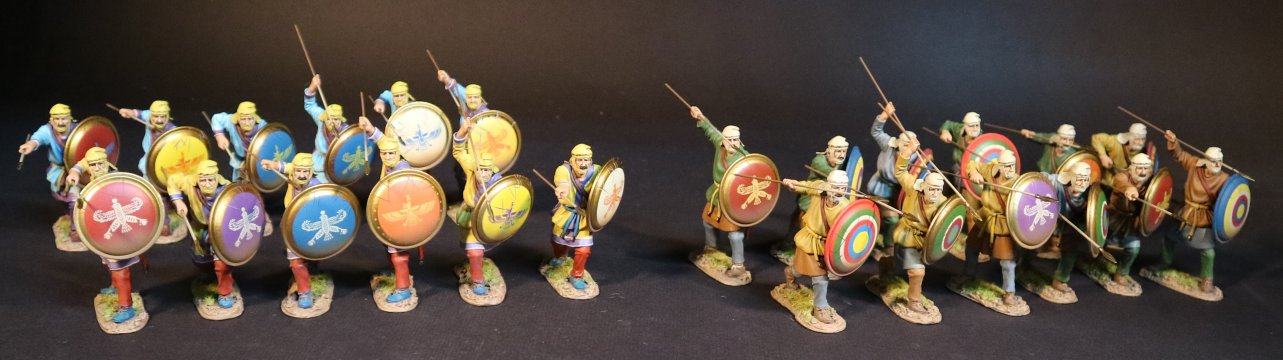
Kardakes translated means “foreign mercenaries”
The Kardakes are a part of the Persian army that also appears towards the later empire, it is uncertain what they really were. Some say that they were mercenaries, others that they were influenced by the
Greek Hoplites and that we should assume that they were a Persian attempt to reform the army in a Greek way.
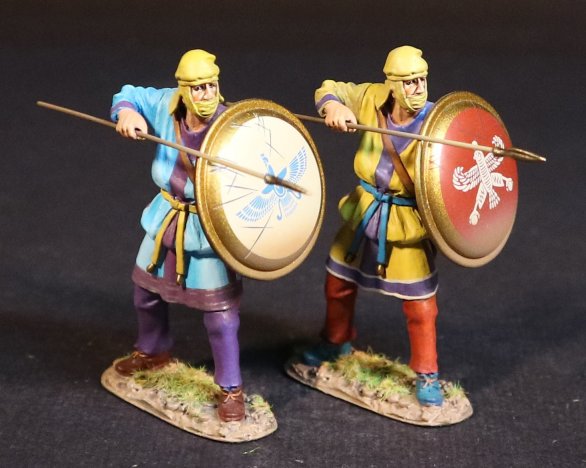
AP-35YB
ARMIES AND ENEMIES OF GREECE AND MACEDONIA,
THE ACHAEMENID PERSIAN EMPIRE,
PERSIAN KARDAKE INFANTRY
The Kardakes are described by historians as "Hoplites", Slingers and "Peltasts". This may illustrate that Kardakes most likely were not a specific troop type, like a heavy infantryman or a skirmisher but rather a specific group which supplied several kinds of soldiers.
This means that the Kardakes would have been equipped differently. At the battle of Issus Arrian calls them Hoplites, and Kallisthenes as Peltasts.
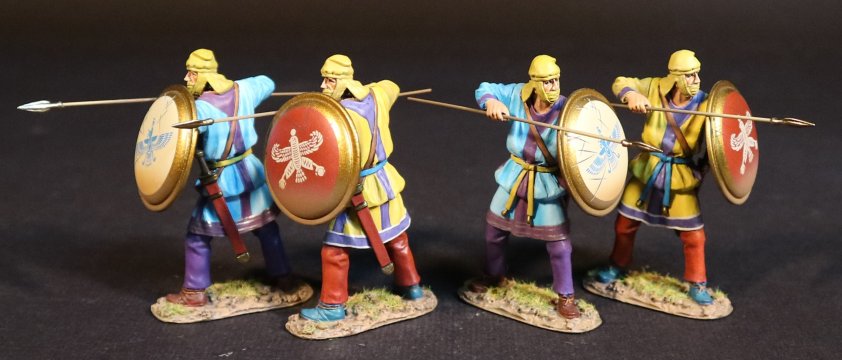
AP-35YBN
ARMIES AND ENEMIES OF GREECE AND MACEDONIA,
THE ACHAEMENID PERSIAN EMPIRE,
PERSIAN KARDAKE INFANTRY
The Kardaka infantryman are based on the Alexander mosaic. Greek hoplite shields are shown as plain bronze, and the others are painted. It is believed that the yellow hooded troops were Persians, although it is also proposed that these could also have been non ethnical Persians. They were believed to have been accorded the status of a Persian bondsman in return for their military service.
This would have entitled them to exemption from taxes, a privilege reserved for the Persians, and perhaps the right to be tried according to Persian law. Therefore it is speculated that the yellow hood may have been the badge of one holding Persian legal status.
If we assume the assumptions concerning the yellow hoods are correct, then it is proposed that the white hoods represent troops of non-Iranian origins.
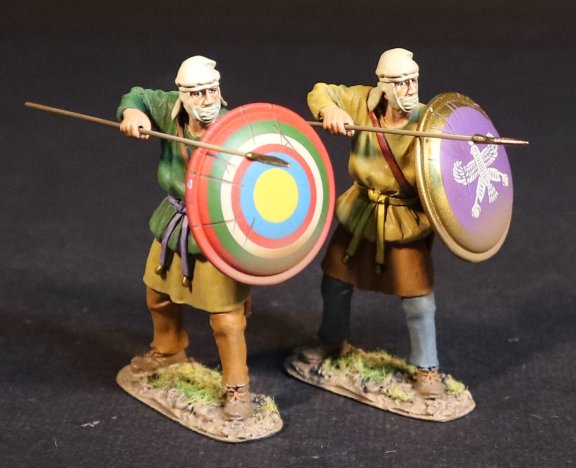
AP-35L
ARMIES AND ENEMIES OF GREECE AND MACEDONIA,
THE ACHAEMENID PERSIAN EMPIRE,
PERSIAN KARDAKE INFANTRY
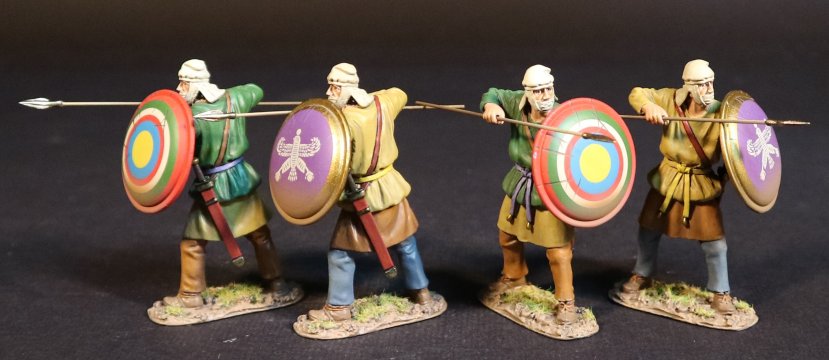
AP-35LN
ARMIES AND ENEMIES OF GREECE AND MACEDONIA,
THE ACHAEMENID PERSIAN EMPIRE,
PERSIAN KARDAKE INFANTRY
ARMIES AND ENEMIES OF ANCIENT ROME
THE SAMNITES
The Samnites and their relatives in central and south Italy are known as Oscans, from the name of their language.
The Samnites were the largest and most important Oscan nation, and was made up of a league of four tribes, the Pentri, Caudidi, Hirpini and Caraceni.
The Samnites fought a series of wars with Rome from 343 to 272, and were by far Rome’s most formidable Italian foe. Many Samnites were later to join Hannibal.
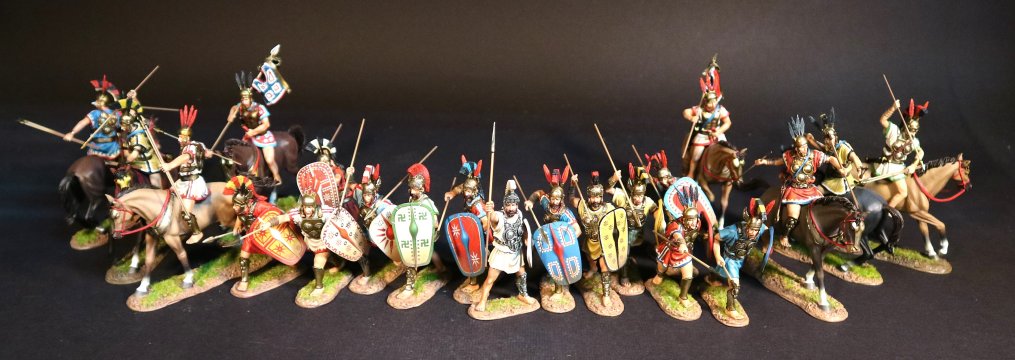
Livy the early Roman historian states that the Samnites fought in a loose phalanx formation in the form of a square, which was tactically flexible and more suited to their hilly terrain.
The Greek style phalanx was a formidable weapon especially from the front. But it was not flexible and once in contact with the enemy was vulnerable on its unprotected flanks and rear. It also need level, open terrain for its cohesion. The Romans had used the Phalanx to great effect along the coastal plains, but war in the constricted terrain of the mountainous spine of central Italy meant the Roman phalanx was a failure. The Samnites did well in mobile warfare and were well used to mountain ambushes.
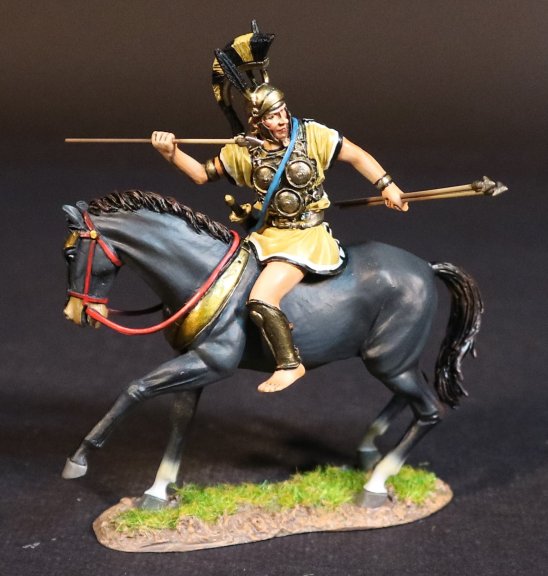
CTSM-16A
ARMIES AND ENEMIES OF ANCIENT ROME,
THE SAMNITES,
SAMNITE WARRIOR
Samnite tunics were brightly coloured and decorated, and there is little evidence of uniformity.
Their weapons included the javelin and short spear. There was a mixture of oval and round shields, and many infantry wore a distinctive cuirasse of Italian design. Small breast and backplates of leather backed bronze linked by hinged straps of similar construction passing over the shoulders and under the arms. The commonest type was the triple disc style.
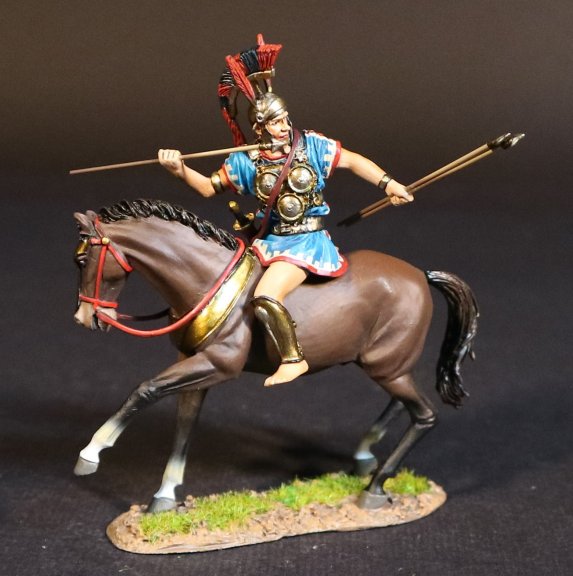
CTSM-16B
ARMIES AND ENEMIES OF ANCIENT ROME,
THE SAMNITES,
SAMNITE WARRIOR
The proportion of cavalry fielded is never mentioned in historical references, but it is assumed it was low, as the wooded mountains would not have been good cavalry country. Like the Romans the Samnite cavalry were organized into Turmae.
Many paintings show warriors carrying spears over their shoulders with bright cloths hanging from them. These are often interpreted as flags, but it is believed that they were tunics and belts. These represent trophies taken from the dead or captured enemy who had been stripped, which was a common practice in both Italy and Greece.
ARMIES AND ENEMIES OF ANCIENT ROME
THE ROMAN ARMY OF THE MID REPUBLIC 275 – 140BC
The Roman army of the mid-Republic (also known as the manipular Roman army or the "Polybian army"), refers to the armed forces deployed by the mid-Roman Republic, from the end of the Samnite Wars (290 BC) to the end of the Social War (88 BC). The first phase of this army, in its manipular structure (290–ca. 130 BC), is described in detail in the Histories of the ancient Greek historian Polybius, writing before 146 BC.
The central feature of the mid-Republican army was the manipular organisation of its battle-line. Instead of a single, large mass (the phalanx) as in the Greek and Early Roman army, the Romans now drew up in three lines (triplex acies) consisting of small units (maniples) of 120 men, arrayed in chessboard fashion, giving much greater tactical strength and flexibility.
The velites would gather at the front, and cover the advance of the hastati. If the hastati failed to break the enemy, they would fall back on the Principes. If the principes could not break them then they would retire behind the Triarii.
This order of battle was almost always followed. It was Scipio Africanus at the Battle of The Great Plains, and the Battle of Zama, who modified this tactic.
MID REPUBLICAN ROMAN PRINCIPES
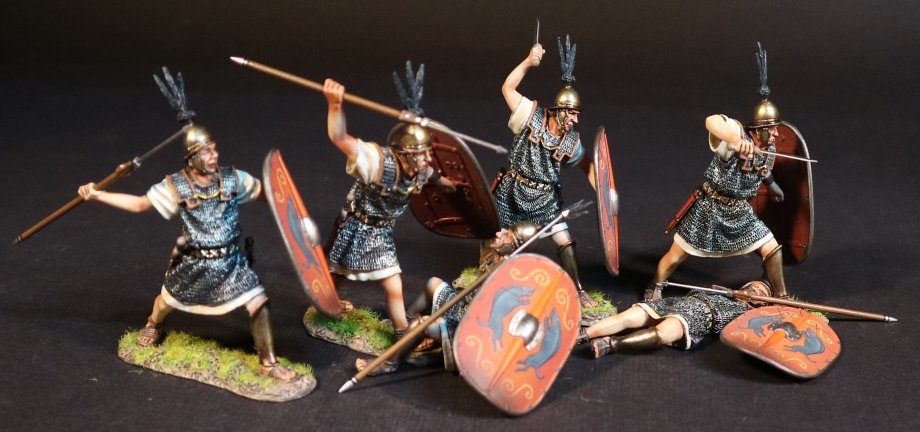
For set-piece battles, the heavy infantry were usually drawn up in three lines.
However, the vast majority of the heavy infantry were stationed in the front two lines, the HASTATI and PRINCIPES. Contained in these two lines were the younger recruits who were expected to do all the fighting. The rear line (TRIARII), was a reserve consisting of older men who formed a line of last resort to provide cover for the front lines if they were put to flight (and also to prevent unauthorised retreat by the front ranks).
The Principes (singular princeps) were originally men in the prime of their lives , who were also fairly wealthy, and could therefore afford decent equipment. These were the heavier infantry of the legion, and their usual position was the second battle line.
By the time of the Punic wars infantry were sorted into classes according to age and experience rather than wealth. The Principes then became the older veterans but their equipment and role remained the same.
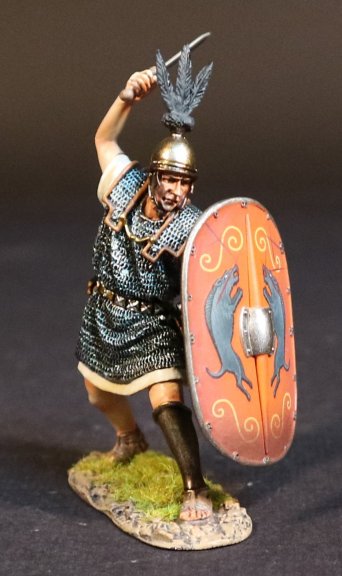
PMRR-02R
ARMIES AND ENEMIES OF ANCIENT ROME,
THE ROMAN ARMY OF THE MID REPUBLIC,
PRINCIPES
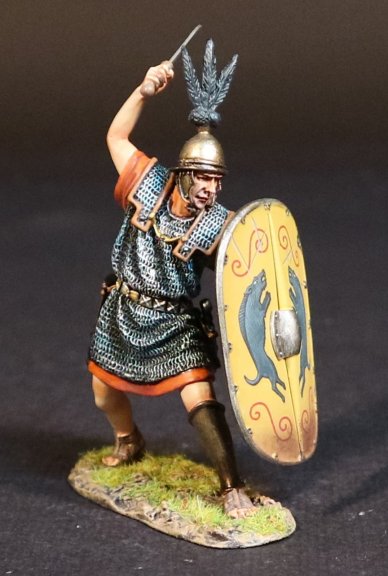
PMRR-02Y
ARMIES AND ENEMIES OF ANCIENT ROME,
THE ROMAN ARMY OF THE MID REPUBLIC,
PRINCIPES
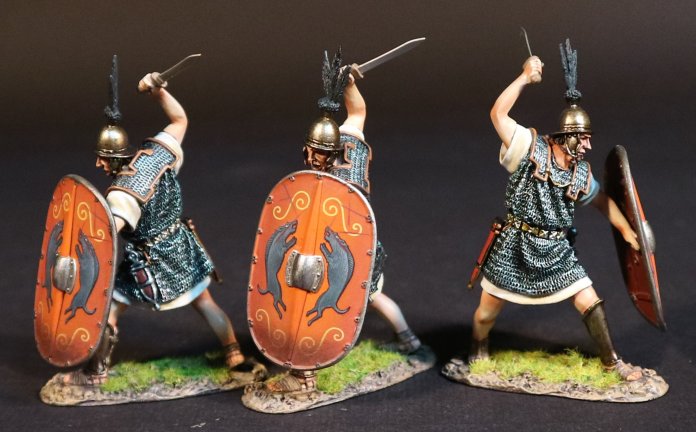
PMRR-02RN
ARMIES AND ENEMIES OF ANCIENT ROME,
THE ROMAN ARMY OF THE MID REPUBLIC,
PRINCIPES
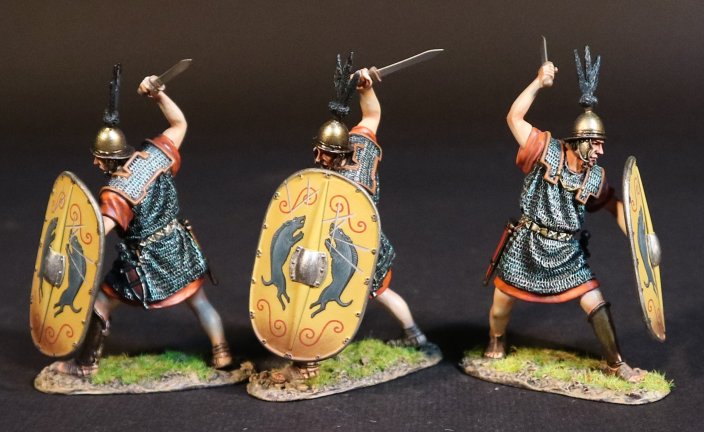
PMRR-02YN
ARMIES AND ENEMIES OF ANCIENT ROME,
THE ROMAN ARMY OF THE MID REPUBLIC,
PRINCIPES
GLADIATORS
"HAIL, EMPEROR, THOSE WHO ARE ABOUT TO DIE SALUTE YOU."
Gladiators were armed combatants who entertained audiences in the Roman Republic and Roman Empire in violent confrontations with other gladiators, wild animals and condemned criminals.
Some gladiators were volunteers who risked their lives and their legal and social standing by appearing in the arena, but most were despised as slaves, schooled under harsh conditions, socially marginalized and even segregated even in death.
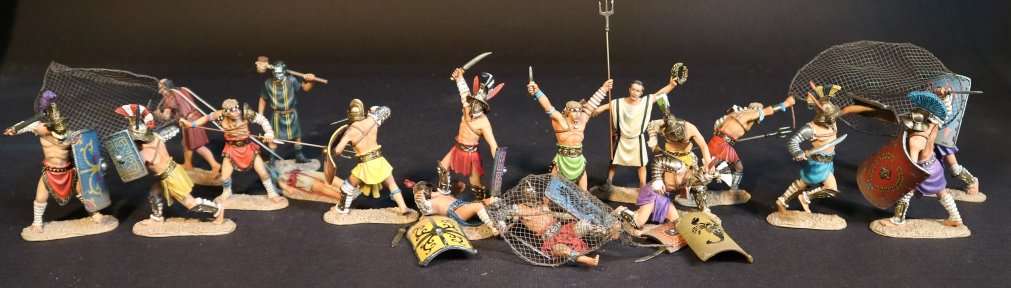
Irrespective of their origin, gladiators offered spectators an example of Rome’s martial ethics and in fighting or dying well, they could inspire admiration and popular acclaim.
They were celebrated in high and low art, and their value as entertainers was commemorated in precious and commonplace objects throughout the Roman world.
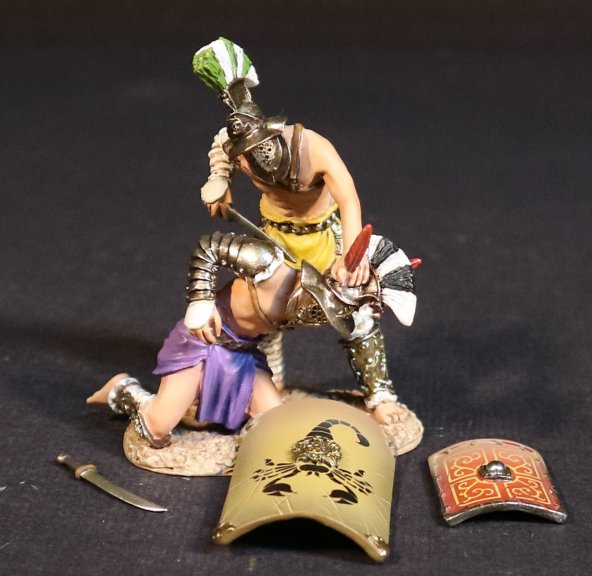
GLAD-10
GLADIATORS
"HAIL, EMPEROR, THOSE WHO ARE ABOUT TO DIE SALUTE YOU."
“VICTORY OR DEATH”
**PLEASE CONTACT YOUR LOCAL DEALER TO PLACE YOUR PRE-ORDERS**
THE ANCIENTS
ARMIES AND ENEMIES OF GREECE AND MACEDONIA
THE ACHAEMENID PERSIAN ARMY
KARDAKE INFANTRY
The Achaemenid Empire c. 550–330 BC, also called the First Persian Empire, was an ancient Iranian empire based in Western Asia founded by Cyrus the Great. Ranging at its greatest extent from the Balkans in the west to the Indus Valley in the east, it was larger than any previous empire in history, spanning 5.5 (or 8) million square kilometers. Incorporating various peoples of different origins and faiths, it is notable for its successful model of a centralised, bureaucratic administration (through satraps under the King of Kings), for building infrastructure such as road systems and a postal system, the use of an official language across its territories, and the development of civil services and a large professional army. The empire's successes inspired similar systems in later empires
The Achaemenid Empire encompassed a vast and diverse range of territories, from Anatolia and Egypt to the Indus Valley. This diversity was reflected in its cavalry, which included units from various ethnic groups such as Medes, Persians, Bactrians, Scythians, and Sakas.
Each group brought its own unique style of cavalry warfare, contributing to the overall effectiveness of the Achaemenid cavalry.
Kardakes translated means “foreign mercenaries”
The Kardakes are a part of the Persian army that also appears towards the later empire, it is uncertain what they really were. Some say that they were mercenaries, others that they were influenced by the
Greek Hoplites and that we should assume that they were a Persian attempt to reform the army in a Greek way.
AP-35YB
ARMIES AND ENEMIES OF GREECE AND MACEDONIA,
THE ACHAEMENID PERSIAN EMPIRE,
PERSIAN KARDAKE INFANTRY
The Kardakes are described by historians as "Hoplites", Slingers and "Peltasts". This may illustrate that Kardakes most likely were not a specific troop type, like a heavy infantryman or a skirmisher but rather a specific group which supplied several kinds of soldiers.
This means that the Kardakes would have been equipped differently. At the battle of Issus Arrian calls them Hoplites, and Kallisthenes as Peltasts.
AP-35YBN
ARMIES AND ENEMIES OF GREECE AND MACEDONIA,
THE ACHAEMENID PERSIAN EMPIRE,
PERSIAN KARDAKE INFANTRY
The Kardaka infantryman are based on the Alexander mosaic. Greek hoplite shields are shown as plain bronze, and the others are painted. It is believed that the yellow hooded troops were Persians, although it is also proposed that these could also have been non ethnical Persians. They were believed to have been accorded the status of a Persian bondsman in return for their military service.
This would have entitled them to exemption from taxes, a privilege reserved for the Persians, and perhaps the right to be tried according to Persian law. Therefore it is speculated that the yellow hood may have been the badge of one holding Persian legal status.
If we assume the assumptions concerning the yellow hoods are correct, then it is proposed that the white hoods represent troops of non-Iranian origins.
AP-35L
ARMIES AND ENEMIES OF GREECE AND MACEDONIA,
THE ACHAEMENID PERSIAN EMPIRE,
PERSIAN KARDAKE INFANTRY
AP-35LN
ARMIES AND ENEMIES OF GREECE AND MACEDONIA,
THE ACHAEMENID PERSIAN EMPIRE,
PERSIAN KARDAKE INFANTRY
ARMIES AND ENEMIES OF ANCIENT ROME
THE SAMNITES
The Samnites and their relatives in central and south Italy are known as Oscans, from the name of their language.
The Samnites were the largest and most important Oscan nation, and was made up of a league of four tribes, the Pentri, Caudidi, Hirpini and Caraceni.
The Samnites fought a series of wars with Rome from 343 to 272, and were by far Rome’s most formidable Italian foe. Many Samnites were later to join Hannibal.
Livy the early Roman historian states that the Samnites fought in a loose phalanx formation in the form of a square, which was tactically flexible and more suited to their hilly terrain.
The Greek style phalanx was a formidable weapon especially from the front. But it was not flexible and once in contact with the enemy was vulnerable on its unprotected flanks and rear. It also need level, open terrain for its cohesion. The Romans had used the Phalanx to great effect along the coastal plains, but war in the constricted terrain of the mountainous spine of central Italy meant the Roman phalanx was a failure. The Samnites did well in mobile warfare and were well used to mountain ambushes.
CTSM-16A
ARMIES AND ENEMIES OF ANCIENT ROME,
THE SAMNITES,
SAMNITE WARRIOR
Samnite tunics were brightly coloured and decorated, and there is little evidence of uniformity.
Their weapons included the javelin and short spear. There was a mixture of oval and round shields, and many infantry wore a distinctive cuirasse of Italian design. Small breast and backplates of leather backed bronze linked by hinged straps of similar construction passing over the shoulders and under the arms. The commonest type was the triple disc style.
CTSM-16B
ARMIES AND ENEMIES OF ANCIENT ROME,
THE SAMNITES,
SAMNITE WARRIOR
The proportion of cavalry fielded is never mentioned in historical references, but it is assumed it was low, as the wooded mountains would not have been good cavalry country. Like the Romans the Samnite cavalry were organized into Turmae.
Many paintings show warriors carrying spears over their shoulders with bright cloths hanging from them. These are often interpreted as flags, but it is believed that they were tunics and belts. These represent trophies taken from the dead or captured enemy who had been stripped, which was a common practice in both Italy and Greece.
ARMIES AND ENEMIES OF ANCIENT ROME
THE ROMAN ARMY OF THE MID REPUBLIC 275 – 140BC
The Roman army of the mid-Republic (also known as the manipular Roman army or the "Polybian army"), refers to the armed forces deployed by the mid-Roman Republic, from the end of the Samnite Wars (290 BC) to the end of the Social War (88 BC). The first phase of this army, in its manipular structure (290–ca. 130 BC), is described in detail in the Histories of the ancient Greek historian Polybius, writing before 146 BC.
The central feature of the mid-Republican army was the manipular organisation of its battle-line. Instead of a single, large mass (the phalanx) as in the Greek and Early Roman army, the Romans now drew up in three lines (triplex acies) consisting of small units (maniples) of 120 men, arrayed in chessboard fashion, giving much greater tactical strength and flexibility.
The velites would gather at the front, and cover the advance of the hastati. If the hastati failed to break the enemy, they would fall back on the Principes. If the principes could not break them then they would retire behind the Triarii.
This order of battle was almost always followed. It was Scipio Africanus at the Battle of The Great Plains, and the Battle of Zama, who modified this tactic.
MID REPUBLICAN ROMAN PRINCIPES
For set-piece battles, the heavy infantry were usually drawn up in three lines.
However, the vast majority of the heavy infantry were stationed in the front two lines, the HASTATI and PRINCIPES. Contained in these two lines were the younger recruits who were expected to do all the fighting. The rear line (TRIARII), was a reserve consisting of older men who formed a line of last resort to provide cover for the front lines if they were put to flight (and also to prevent unauthorised retreat by the front ranks).
The Principes (singular princeps) were originally men in the prime of their lives , who were also fairly wealthy, and could therefore afford decent equipment. These were the heavier infantry of the legion, and their usual position was the second battle line.
By the time of the Punic wars infantry were sorted into classes according to age and experience rather than wealth. The Principes then became the older veterans but their equipment and role remained the same.
PMRR-02R
ARMIES AND ENEMIES OF ANCIENT ROME,
THE ROMAN ARMY OF THE MID REPUBLIC,
PRINCIPES
PMRR-02Y
ARMIES AND ENEMIES OF ANCIENT ROME,
THE ROMAN ARMY OF THE MID REPUBLIC,
PRINCIPES
PMRR-02RN
ARMIES AND ENEMIES OF ANCIENT ROME,
THE ROMAN ARMY OF THE MID REPUBLIC,
PRINCIPES
PMRR-02YN
ARMIES AND ENEMIES OF ANCIENT ROME,
THE ROMAN ARMY OF THE MID REPUBLIC,
PRINCIPES
GLADIATORS
"HAIL, EMPEROR, THOSE WHO ARE ABOUT TO DIE SALUTE YOU."
Gladiators were armed combatants who entertained audiences in the Roman Republic and Roman Empire in violent confrontations with other gladiators, wild animals and condemned criminals.
Some gladiators were volunteers who risked their lives and their legal and social standing by appearing in the arena, but most were despised as slaves, schooled under harsh conditions, socially marginalized and even segregated even in death.
Irrespective of their origin, gladiators offered spectators an example of Rome’s martial ethics and in fighting or dying well, they could inspire admiration and popular acclaim.
They were celebrated in high and low art, and their value as entertainers was commemorated in precious and commonplace objects throughout the Roman world.
GLAD-10
GLADIATORS
"HAIL, EMPEROR, THOSE WHO ARE ABOUT TO DIE SALUTE YOU."
“VICTORY OR DEATH”
**PLEASE CONTACT YOUR LOCAL DEALER TO PLACE YOUR PRE-ORDERS**


