

- Joined
- Feb 2, 2011
- Messages
- 2,489
NEW RELEASES FOR JUNE 2026
THE SECOND WORLD WAR
GERMAN ARMOUR
On 10 May 1940, Germany launched its long-prepared western offensive against the Netherlands, Belgium, Luxembourg, and France. The campaign marked the second demonstration of Germany’s revolutionary doctrine, dubbed Blitzkrieg or “Lightning War” by the Allies, that combined concentrated armoured assaults, mobile infantry, close air support, and rapid operational manoeuvre to achieve decisive breakthroughs. While the Allied powers expected a replay of the static trench warfare of the First World War, German commanders instead emphasized speed, initiative, and surprise. Panzer divisions spearheaded deep penetrations into enemy territory, bypassing fortified positions and created chaos in Allied rear areas before coordinated resistance could be organized.
Central to the design of Fall Gelb (Case Yellow), the German plan, was to lure Allied armies northward into Belgium while the decisive German thrust advanced farther south through the Ardennes Forest. Once German armoured formations crossed the Meuse River near Sedan, they drove rapidly toward the English Channel, cutting off the British Expeditionary Force and large portions of the French Army. Simultaneously, powerful Panzer formations operating farther north in Belgium shattered Allied defenses through aggressive manoeuvre warfare. Among the most famous of these formations was the 7. Panzer-Division.
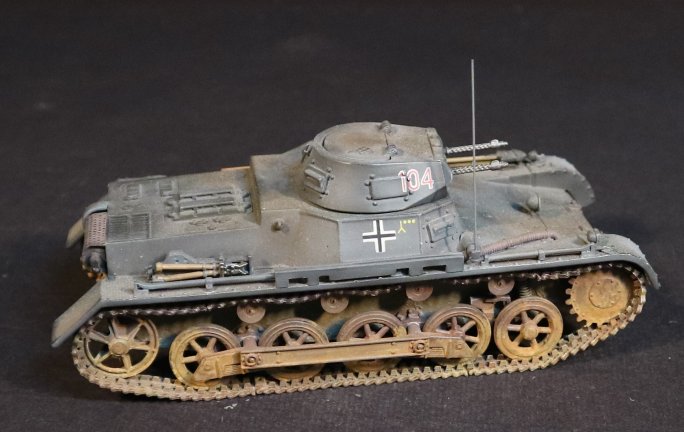
GA-12B
THE SECOND WORLD WAR,
GERMAN ARMOUR,
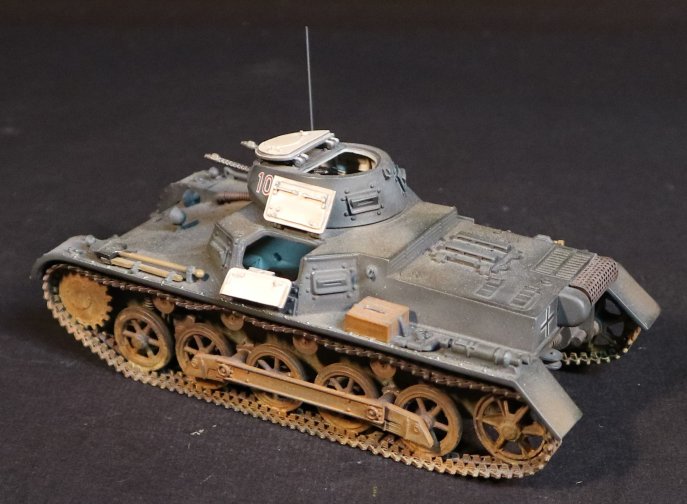
Panzer I Ausf. B #104,
7. Panzer-Division, XV. Armeekorps (mot.), Heeresgruppe B
France and the Low Countries, May–June 1940
Originally formed as the 2. leichte Division, it was converted to a full Panzer division in October 1939 due to the limited effectiveness of leichte Divisions employed during the Polish campaign. The 7. Pz.Div. was placed under the command of Generalmajor Erwin Rommel in early February 1940. Assigned to General Hermann Hoth’s XV. Armeekorps (mot.) within Heeresgruppe B, the division participated in the advance through Belgium, crossing the Meuse River near Dinant on 13 May after fierce fighting and determined French resistance. Rommel personally directed many frontline operations, often moving far ahead of his headquarters to maintain momentum and exploit weaknesses in enemy defenses.
Following the Meuse breakthrough, the 7. Panzer-Division advanced with extraordinary speed and achieved its first objective at Avesnes-sur-Helpe on 16 May, where the plan called for 7. Pz.Div. to stop and await further orders. However, Rommel pressed on under his own judgment in a style that would leave the whereabouts of Rommel’s division unknown, causing confusion among both Allied forces and the German High Command. The division captured Cambrai on 18 May and reached the vicinity of Arras, where it helped repel the famous British counterattack on 21 May that involved heavily armoured British Matilda tanks that completely outmatched their German opponents, whose panzers did not possess weapons capable of penetrating the Matilda’s armour. Only by skillfully employing dual-purpose 8.8cm FLaK 36 cannons in the anti-tank role were the Germans able to force the British to withdraw.
7.Pz.Div. then continued its rapid advance toward the Channel coast, reaching Lille on 27 May where, with the help of 5. Pz.Div., which was also placed under his command, Rommel forced the surrender of a 40,000-man French garrison after a four-day siege. Resuming the advance on 5 June, Rommel’s division covered over 100 km in two days to find the Seine bridges at Le Havre destroyed. Wheeling north, Rommel blocked the Allies’ westward route to Le Havre and forced the surrender of 10,000 troops from the British 51st Highland Division and the French 9th Army Corps. On 17 June, Rommel was then ordered to drive for the naval base at Cherbourg. Advancing over 240 km in just 24 hours, he forced the French garrison’s surrender.
Rommel’s aggressive command style and the division’s remarkable operational tempo and unpredictable advances, which resulted in 7. Pz.Div. seeming to appear out of thin air to attack the Allies, earned it the nickname “Gespensterdivision” or “Ghost Division”, and made 7. Pz.Div. one of the most celebrated German armoured formations of the early war.
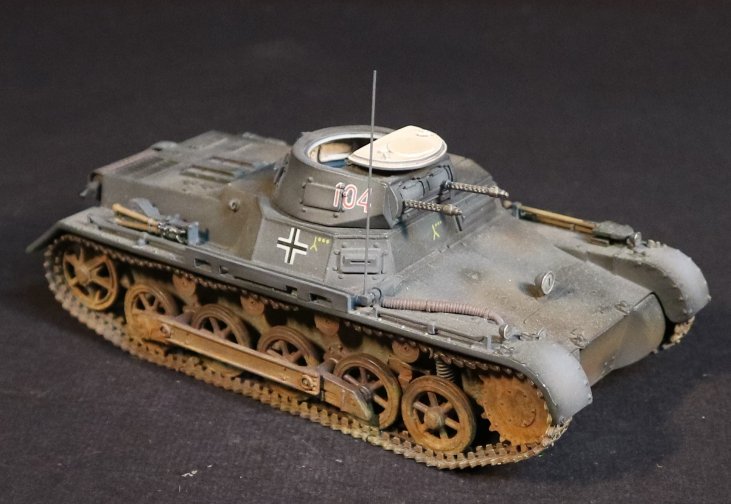
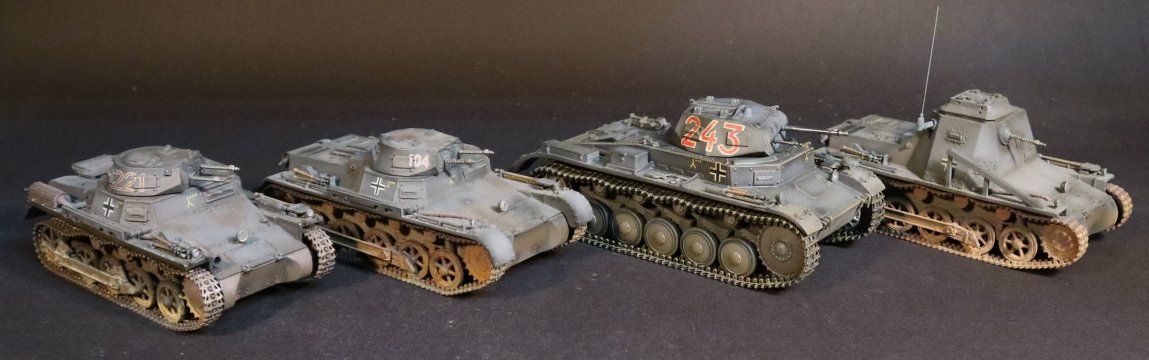
The JJ Designs Panzer I Ausf. B #104 represents a vehicle of the famed 7. Panzer-Division during the 1940 Blitzkrieg campaign and captures the appearance of early-war German armour at the height of its dramatic operational successes. Although designed as an interim solution during German rearmament, the Panzer I was still one of the most numerous panzers employed during Fall Gelb. Developed as an improved version of the earlier Ausf. A, the Panzer I Ausf. B incorporated a more powerful Maybach engine that required a slightly lengthened chassis and the addition of a fifth road wheel. While this redesign improved mobility and operational range, the vehicle remained lightly protected and vulnerable to virtually all anti-tank weapons of the period while being armed only with twin 7.92 mm MG-13 machine guns. Nevertheless, large numbers of Panzer I tanks participated effectively when employed in concentrated armoured formations supported by artillery and close air support. Their battlefield success reflected the effectiveness of German operational doctrine far more than any technical superiority.
Whether displayed individually or alongside other German armoured vehicles of the 1940 campaign, this model is ideal for collectors seeking to recreate scenes from the lightning offensives that transformed modern warfare.
As standard for all JJ D tank models, the Panzer I Ausf. B #104 comes with the following features:
Once again, a big thank you to, Steve “The Foreign Expert” (Hunter Rose).
**PLEASE CONTACT YOUR LOCAL DEALER TO PLACE YOUR PRE-ORDERS**
THE SECOND WORLD WAR
GERMAN ARMOUR
On 10 May 1940, Germany launched its long-prepared western offensive against the Netherlands, Belgium, Luxembourg, and France. The campaign marked the second demonstration of Germany’s revolutionary doctrine, dubbed Blitzkrieg or “Lightning War” by the Allies, that combined concentrated armoured assaults, mobile infantry, close air support, and rapid operational manoeuvre to achieve decisive breakthroughs. While the Allied powers expected a replay of the static trench warfare of the First World War, German commanders instead emphasized speed, initiative, and surprise. Panzer divisions spearheaded deep penetrations into enemy territory, bypassing fortified positions and created chaos in Allied rear areas before coordinated resistance could be organized.
Central to the design of Fall Gelb (Case Yellow), the German plan, was to lure Allied armies northward into Belgium while the decisive German thrust advanced farther south through the Ardennes Forest. Once German armoured formations crossed the Meuse River near Sedan, they drove rapidly toward the English Channel, cutting off the British Expeditionary Force and large portions of the French Army. Simultaneously, powerful Panzer formations operating farther north in Belgium shattered Allied defenses through aggressive manoeuvre warfare. Among the most famous of these formations was the 7. Panzer-Division.
GA-12B
THE SECOND WORLD WAR,
GERMAN ARMOUR,
Panzer I Ausf. B #104,
7. Panzer-Division, XV. Armeekorps (mot.), Heeresgruppe B
France and the Low Countries, May–June 1940
Originally formed as the 2. leichte Division, it was converted to a full Panzer division in October 1939 due to the limited effectiveness of leichte Divisions employed during the Polish campaign. The 7. Pz.Div. was placed under the command of Generalmajor Erwin Rommel in early February 1940. Assigned to General Hermann Hoth’s XV. Armeekorps (mot.) within Heeresgruppe B, the division participated in the advance through Belgium, crossing the Meuse River near Dinant on 13 May after fierce fighting and determined French resistance. Rommel personally directed many frontline operations, often moving far ahead of his headquarters to maintain momentum and exploit weaknesses in enemy defenses.
Following the Meuse breakthrough, the 7. Panzer-Division advanced with extraordinary speed and achieved its first objective at Avesnes-sur-Helpe on 16 May, where the plan called for 7. Pz.Div. to stop and await further orders. However, Rommel pressed on under his own judgment in a style that would leave the whereabouts of Rommel’s division unknown, causing confusion among both Allied forces and the German High Command. The division captured Cambrai on 18 May and reached the vicinity of Arras, where it helped repel the famous British counterattack on 21 May that involved heavily armoured British Matilda tanks that completely outmatched their German opponents, whose panzers did not possess weapons capable of penetrating the Matilda’s armour. Only by skillfully employing dual-purpose 8.8cm FLaK 36 cannons in the anti-tank role were the Germans able to force the British to withdraw.
7.Pz.Div. then continued its rapid advance toward the Channel coast, reaching Lille on 27 May where, with the help of 5. Pz.Div., which was also placed under his command, Rommel forced the surrender of a 40,000-man French garrison after a four-day siege. Resuming the advance on 5 June, Rommel’s division covered over 100 km in two days to find the Seine bridges at Le Havre destroyed. Wheeling north, Rommel blocked the Allies’ westward route to Le Havre and forced the surrender of 10,000 troops from the British 51st Highland Division and the French 9th Army Corps. On 17 June, Rommel was then ordered to drive for the naval base at Cherbourg. Advancing over 240 km in just 24 hours, he forced the French garrison’s surrender.
Rommel’s aggressive command style and the division’s remarkable operational tempo and unpredictable advances, which resulted in 7. Pz.Div. seeming to appear out of thin air to attack the Allies, earned it the nickname “Gespensterdivision” or “Ghost Division”, and made 7. Pz.Div. one of the most celebrated German armoured formations of the early war.
The JJ Designs Panzer I Ausf. B #104 represents a vehicle of the famed 7. Panzer-Division during the 1940 Blitzkrieg campaign and captures the appearance of early-war German armour at the height of its dramatic operational successes. Although designed as an interim solution during German rearmament, the Panzer I was still one of the most numerous panzers employed during Fall Gelb. Developed as an improved version of the earlier Ausf. A, the Panzer I Ausf. B incorporated a more powerful Maybach engine that required a slightly lengthened chassis and the addition of a fifth road wheel. While this redesign improved mobility and operational range, the vehicle remained lightly protected and vulnerable to virtually all anti-tank weapons of the period while being armed only with twin 7.92 mm MG-13 machine guns. Nevertheless, large numbers of Panzer I tanks participated effectively when employed in concentrated armoured formations supported by artillery and close air support. Their battlefield success reflected the effectiveness of German operational doctrine far more than any technical superiority.
Whether displayed individually or alongside other German armoured vehicles of the 1940 campaign, this model is ideal for collectors seeking to recreate scenes from the lightning offensives that transformed modern warfare.
As standard for all JJ D tank models, the Panzer I Ausf. B #104 comes with the following features:
- Opening commander’s hatch
- Antenna can be raised or lowered
- Detailed crew compartment
Once again, a big thank you to, Steve “The Foreign Expert” (Hunter Rose).
**PLEASE CONTACT YOUR LOCAL DEALER TO PLACE YOUR PRE-ORDERS**