


- Joined
- Feb 2, 2011
- Messages
- 2,464
NEW RELEASES FOR MARCH 2026
ARMIES AND ENEMIES OF ANCIENT ROME
THE CARTHAGINIANS
CELTIBERIAN SCUTARIUS
Although initially the Carthaginian army was composed only of Citizens of Phoenician origin, it saw increased recruitment of contingents of mercenaries and allies a necessity in order to realize the policy of imperial expansion.
This use of mercenaries saved the metropolitan population from heavy casualties that were not easily replaceable, and it also reflected the Carthaginian concept of war, which was considered simply as an extension of business.
With the enlargement of Punic economic interests the army became more exclusively mercenary and progressively came to include almost all the peoples of the central and western Mediterranean area.
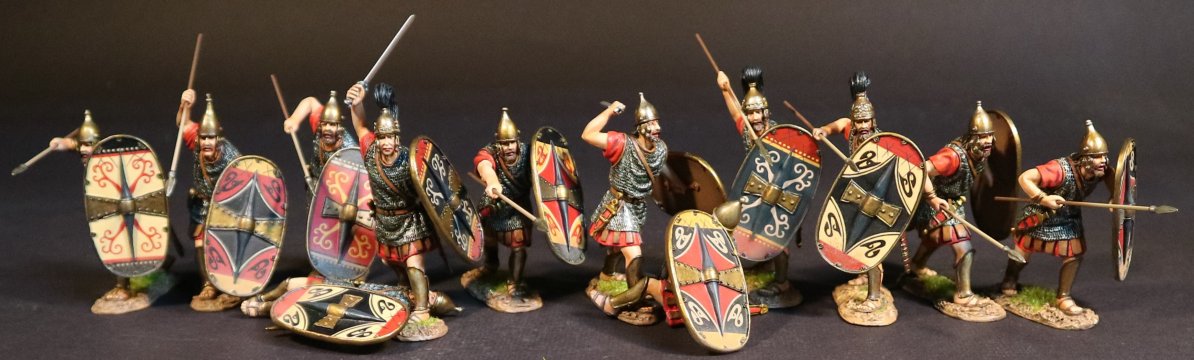
The success of Carthage in bringing most of central and southern Iberia under its control was a crucial element in their continued ability to pursue the war against Rome.
Iberian troops probably fell into two rough classifications, the Scutarii and the Caetratii.
These types basically defined the type of shield, with the Scutum being a large flat oval shield with a wooden spine and metal boss.
The Caetra was a flat, smaller round shield with a circular metal boss.
Both troop types were armed with a dagger and sword, as well as spears for hand to hand fighting and for throwing.
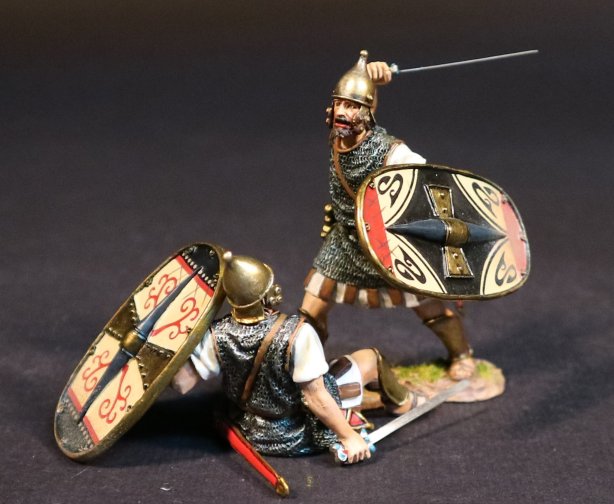
CTIB-10A
ARMIES AND ENEMIES OF ANCIENT ROME,
THE CARTHAGINIANS,
CELTIBARIAN SCUTARII
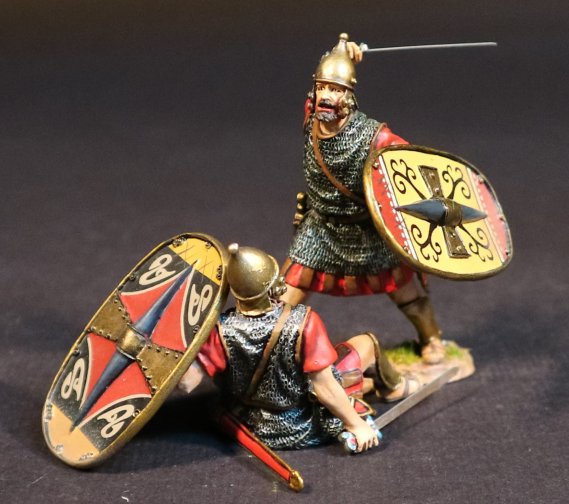
CTIB-10B
ARMIES AND ENEMIES OF ANCIENT ROME,
THE CARTHAGINIANS,
CELTIBARIAN SCUTARII
The Scutarius were well armoured heavy infantry, and the Celtibarians were mainly from the north, and were heavily influenced by their Gallic neighbours. Those who fought with Hannibal would have been mercenaries, and in organization and military effectiveness would have been much the same as the Gauls. They were known to be fierce, independent and dangerous.
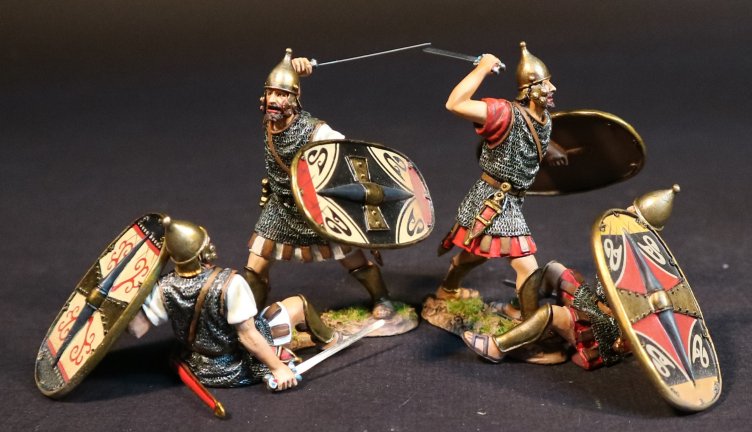
CTIB-10N
ARMIES AND ENEMIES OF ANCIENT ROME,
THE CARTHAGINIANS,
CELTIBARIAN SCUTARIUS
THE BATTLE OF ZAMA 202BC
BALEARIC SLINGERS
The Balearic slingers launched bullets that had a speed of 160 kilometers per hour (one hundred miles per hour). They could hit their opponents at a distance of 400 meters (1,300 feet) but were deadliest at a distance of 120 meters (400 feet).
An experienced slinger could make seven shots per minute.
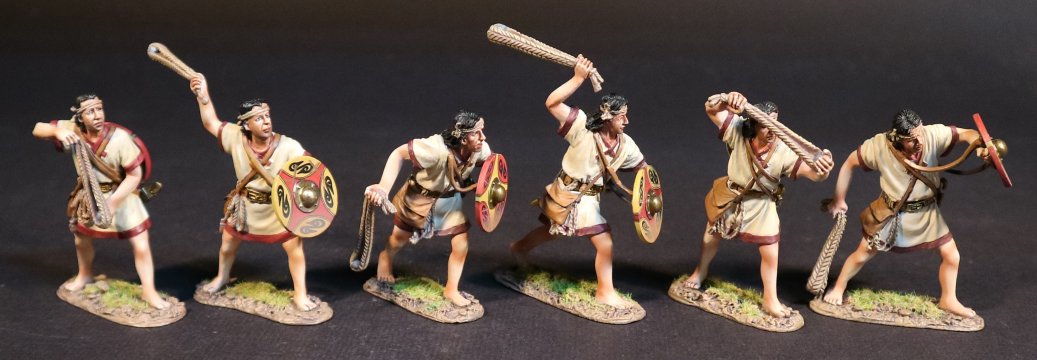
They carried three slings, one around their head, one around their waist, and the third in their hands. Different slings were used to hit targets at different distances. The longer the sling, the larger distance it could cover.
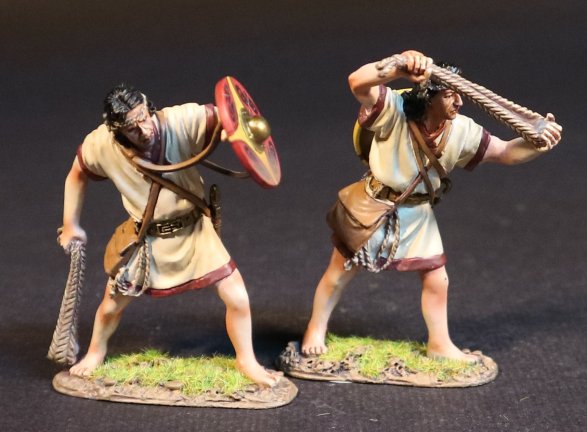
CTSK-06
ARMIES AND ENEMIES OF ANCIENT ROME,
THE CARTHAGINIANS,
THE BATTLE OF ZAMA 202BC,
BALEARIC SLINGERS
They manufactured the bullets for slings from stone, lead, or clay.
Some sling bullets had holes to give off a buzzing sound, reminiscent of an agitated wasp. This was an ancient form of psychological warfare.
Often, the bullets contained inscriptions and images. The most common were the images of a lightning bolt, a snake, or a scorpion. Some bullets had inscriptions such as: “Take this”, “Catch”, “Ouch”, or “Get pregnant with this.
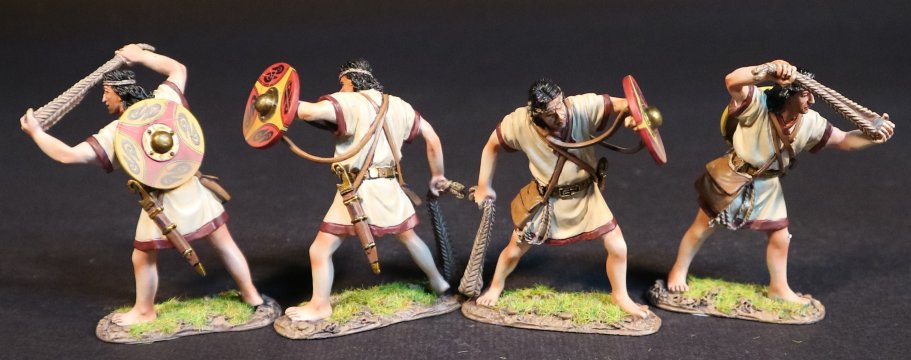
CTSK-06N
ARMIES AND ENEMIES OF ANCIENT ROME,
THE CARTHAGINIANS,
THE BATTLE OF ZAMA 202BC,
BALEARIC SLINGERS
The Balearic Islands are a Spanish archipelago in the Mediterranean Sea. Today, these islands are best known as tourist destinations, with the islands of Ibiza and Mallorca being especially popular.
However, in antiquity, the Balearic Islands were best known for the deadliest slingers in the Mediterranean.
The Balearic slingers were a coveted asset of every army of antiquity.
The name for the Balearic Islands originated from the Greek word “ballo” which means “to launch.”
The Balearic slingers started training as soon as they could walk. Supposedly, mothers didn’t give their children food until they could hit their targets.
Years and years of practice made slinging their second nature and turned these slingers into game-changing warriors on the battlefield.
During the second Punic War (218-201BC) the Carthaginian master general Hannibal wreaked havoc in Roman Italy. The Romans were terrified of the invisible killers, the Balearic slingers.
The Carthaginians recognized the skill of the slingers and tried to hire as many of them as possible. Interestingly the slingers didn’t want gold, they demanded to be paid with wine and women.
Once the Romans defeated the Carthaginians they made sure that the Balearic slingers became part of the auxiliary units of the Roman legions.
The use of slings slowly faded away. It took years and years of practice to train warriors to efficiently use this weapon. In the Middle Ages, bowmen required less effort to train than slingers. Eventually, bows were replaced by firearms, the usage of which could be taught in a matter of weeks.
We could say technological advancement made the Balearic slingers obsolete. However, history will remember them for their skills, terrifying reputation, and admiration from foes and friends alike.
Please Contact your Dealer to pre-order!
ARMIES AND ENEMIES OF ANCIENT ROME
THE CARTHAGINIANS
CELTIBERIAN SCUTARIUS
Although initially the Carthaginian army was composed only of Citizens of Phoenician origin, it saw increased recruitment of contingents of mercenaries and allies a necessity in order to realize the policy of imperial expansion.
This use of mercenaries saved the metropolitan population from heavy casualties that were not easily replaceable, and it also reflected the Carthaginian concept of war, which was considered simply as an extension of business.
With the enlargement of Punic economic interests the army became more exclusively mercenary and progressively came to include almost all the peoples of the central and western Mediterranean area.
The success of Carthage in bringing most of central and southern Iberia under its control was a crucial element in their continued ability to pursue the war against Rome.
Iberian troops probably fell into two rough classifications, the Scutarii and the Caetratii.
These types basically defined the type of shield, with the Scutum being a large flat oval shield with a wooden spine and metal boss.
The Caetra was a flat, smaller round shield with a circular metal boss.
Both troop types were armed with a dagger and sword, as well as spears for hand to hand fighting and for throwing.
CTIB-10A
ARMIES AND ENEMIES OF ANCIENT ROME,
THE CARTHAGINIANS,
CELTIBARIAN SCUTARII
CTIB-10B
ARMIES AND ENEMIES OF ANCIENT ROME,
THE CARTHAGINIANS,
CELTIBARIAN SCUTARII
The Scutarius were well armoured heavy infantry, and the Celtibarians were mainly from the north, and were heavily influenced by their Gallic neighbours. Those who fought with Hannibal would have been mercenaries, and in organization and military effectiveness would have been much the same as the Gauls. They were known to be fierce, independent and dangerous.
CTIB-10N
ARMIES AND ENEMIES OF ANCIENT ROME,
THE CARTHAGINIANS,
CELTIBARIAN SCUTARIUS
THE BATTLE OF ZAMA 202BC
BALEARIC SLINGERS
The Balearic slingers launched bullets that had a speed of 160 kilometers per hour (one hundred miles per hour). They could hit their opponents at a distance of 400 meters (1,300 feet) but were deadliest at a distance of 120 meters (400 feet).
An experienced slinger could make seven shots per minute.
They carried three slings, one around their head, one around their waist, and the third in their hands. Different slings were used to hit targets at different distances. The longer the sling, the larger distance it could cover.
CTSK-06
ARMIES AND ENEMIES OF ANCIENT ROME,
THE CARTHAGINIANS,
THE BATTLE OF ZAMA 202BC,
BALEARIC SLINGERS
They manufactured the bullets for slings from stone, lead, or clay.
Some sling bullets had holes to give off a buzzing sound, reminiscent of an agitated wasp. This was an ancient form of psychological warfare.
Often, the bullets contained inscriptions and images. The most common were the images of a lightning bolt, a snake, or a scorpion. Some bullets had inscriptions such as: “Take this”, “Catch”, “Ouch”, or “Get pregnant with this.
CTSK-06N
ARMIES AND ENEMIES OF ANCIENT ROME,
THE CARTHAGINIANS,
THE BATTLE OF ZAMA 202BC,
BALEARIC SLINGERS
The Balearic Islands are a Spanish archipelago in the Mediterranean Sea. Today, these islands are best known as tourist destinations, with the islands of Ibiza and Mallorca being especially popular.
However, in antiquity, the Balearic Islands were best known for the deadliest slingers in the Mediterranean.
The Balearic slingers were a coveted asset of every army of antiquity.
The name for the Balearic Islands originated from the Greek word “ballo” which means “to launch.”
The Balearic slingers started training as soon as they could walk. Supposedly, mothers didn’t give their children food until they could hit their targets.
Years and years of practice made slinging their second nature and turned these slingers into game-changing warriors on the battlefield.
During the second Punic War (218-201BC) the Carthaginian master general Hannibal wreaked havoc in Roman Italy. The Romans were terrified of the invisible killers, the Balearic slingers.
The Carthaginians recognized the skill of the slingers and tried to hire as many of them as possible. Interestingly the slingers didn’t want gold, they demanded to be paid with wine and women.
Once the Romans defeated the Carthaginians they made sure that the Balearic slingers became part of the auxiliary units of the Roman legions.
The use of slings slowly faded away. It took years and years of practice to train warriors to efficiently use this weapon. In the Middle Ages, bowmen required less effort to train than slingers. Eventually, bows were replaced by firearms, the usage of which could be taught in a matter of weeks.
We could say technological advancement made the Balearic slingers obsolete. However, history will remember them for their skills, terrifying reputation, and admiration from foes and friends alike.
Please Contact your Dealer to pre-order!

