


- Joined
- Feb 2, 2011
- Messages
- 2,464
NEW RELEASES FOR MAY 2026
THUNDER ON THE PLAINS
THE BLACK HILL WARS 1876-1877
THE BATTLE OF THE ROSEBUD, 17th JUNE 1876
US ARMY FRONTIER SCOUTS
The role of the frontier scout was vital during the period of expansion between 1840 and 1890. These men possessed a priceless knowledge of the geography, people and characteristics of the great American hinterland. They were to have a larger influence on the pace of settlement and control of the American west than any other single factor.
PAWNEE SCOUT
One of the most successful groups of Indian auxiliary troops employed on the frontier was organized in 1864 to protect settlers on the plains of Kansas and Nebraska. This was mainly due to the absence of regular soldiers because of the civil war.
In August 1864 Major General Samuel R. Curtis, commander of the Kansas Department, ordered the recruitment of 77 Pawnee warriors to be led by Captain Joseph McFadden, to join the expedition against hostile Sioux war bands.
The Pawnee were the hereditary enemy of the Sioux and Cheyenne. In order to avoid being mistaken for hostiles, the Pawnee scouts were issued with army uniforms which combined with elements of Pawnee dress, would give them a “distinct and graphic appearance”.
The scouts were used to protect workmen building the Union Pacific Railroad across Nebraska into Wyoming, and after completion continued to guard and patrol the Union Pacific Railroad, making it possible to run regular trains to the Pacific Ocean.
In the wake of the Custer defeat at Little Bighorn, Major Frank North raised 100 scouts who helped the US Army defeat the Sioux and Cheyenne, and were mustered out on May 1st 1877.
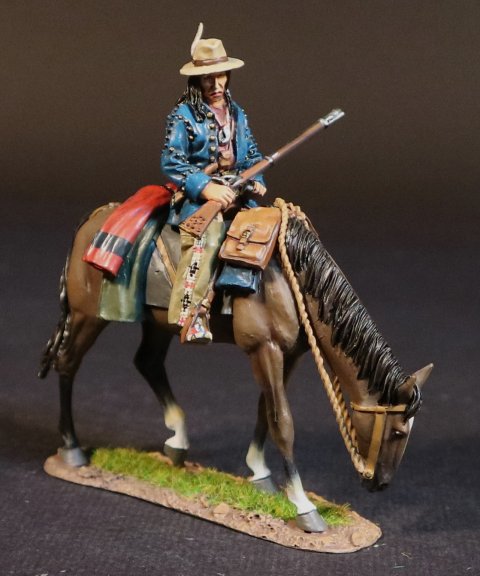
RSBUD-38
THUNDER ON THE PLAINS
THE BLACK HILL WARS 1876-1877
THE BATTLE OF THE ROSEBUD, 17th JUNE 1876,
UNITED STATES CAVALRY,
PAWNEE SCOUT.
THE FIGHT WHEN ROMAN NOSE WAS KILLED, 17th SEPTEMBER 1868
CHEYENNE WARRIOR, WOQINI
Roman Nose (c, 1823 – September 17th, 1868) also known as Hook Nose, in Cheyenne Vohkoxenehe, also spelled as Woqini and Woquini. He was a member of the Northern Cheyenne, and is considered to be one of, if not the greatest and most influential warriors during the Plains Indian War of the 1860’s.
Born during the prosperous days of the fur trade in the 1820’s he was called Moseskanestsenoonahe as a youth, and later took the name Wokini, which the Euro-Americans rendered as Roman Nose.
Considered invincible in combat, this fierce warrior distinguished himself in battle to such a degree that the US military mistook him for the Chief of the entire Cheyenne nation.
Contrary to popular myth, Roman Nose was never a chief, nor a leader of any of the six Cheyenne military societies.
Physically imposing in stature, there are several historical references to Roman Nose’s flamboyant, intimidating personality and battle prowess.
Isaac Coates, General Winfield S. Hancock’s surgeon wrote in his journal:
"of all the chiefs, he is one of the finest specimens, physically, of his race. He is quite six feet in height, finely formed with a large body and muscular limbs. His appearance, was decidedly military, and on this occasion, particularly so, since he wore the uniform of a General in the Army. A seven-shooting Spencer carbine hung at the side of his saddle, four large Navy revolvers stuck in his belt, and a bow, already strung with arrows, were grasped in his left hand. Thus armed and mounted on a fine horse, he was a good representative of the God of War, and his manner showed plainly that he did not care whether we talked or fought..."
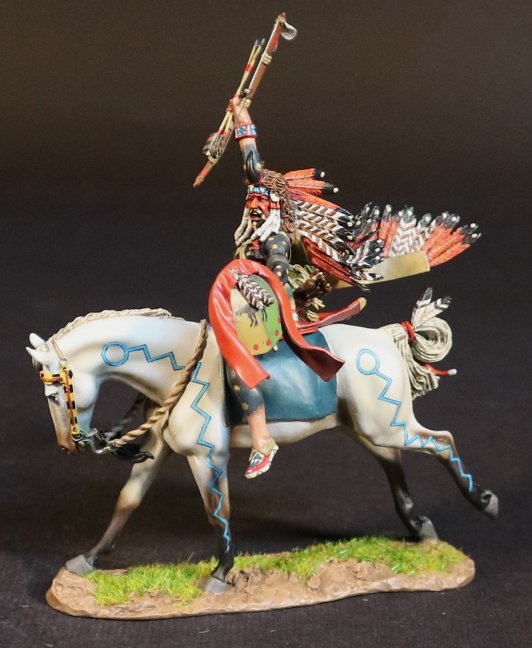
SSB-50
THUNDER ON THE PLAINS
THE FIGHT WHEN ROMAN NOSE WAS KILLED,
17th -19th SEPTEMBER 1868,
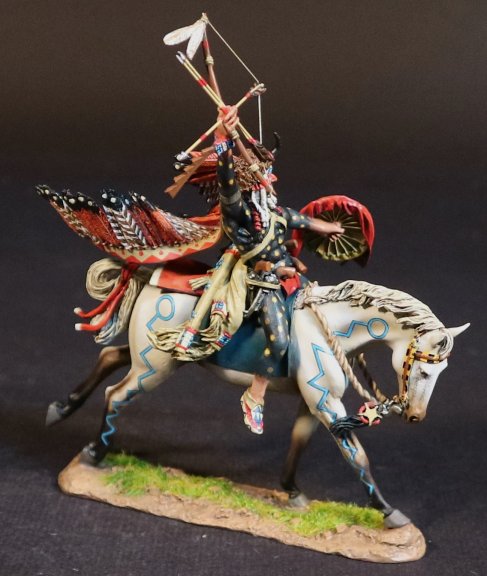
CHEYENNE WARRIOR WOQINI
Roman Nose’s battle tactics were described,
“His bravery came naturally and spotless; his influence was enormous as he was the acknowledged leader in war..”
A common battle tactic of his was to ride up and down the line of army troops within rifle range, getting the enemy to discharge their weapons and waste their ammunition.
He was known to be very spiritual, and spent endless hours in preparing his medicine, his mind and spirit. It is known that Roman Nose would spend days on quests to cleanse his spirit and gain strength through his medicine. He also felt he and his warriors were protected by his famous War bonnet that was made and given to him by White Bull.
It was believed that it was because of his war bonnet and the medicine he practiced to be the reason why he was such a successful warrior.
For these rituals to be successful there were certain rules he had to obey. Some of these rules included never shaking hands with anyone, and never eating food that had been prepared or served using metal.
Several days prior to his final battle, Roman Nose visited the nearby Sioux camp, where he participated in a feast. During the feast he ate some fry bread, where the woman who cooked the bread used an iron fork to remove it from the cooking pan, which violated one of the conditions of his medicine.
He did not have the time to perform the necessary cleansing ceremony to restore his medicine. Because of this, he did not participate in the fighting as he normally would, preferring to watch the battle from afar. During the battle, he was chastised by an elderly warrior named White Contrary for his lack of participation, and thus decided to enter the battle after all, knowing that he would die.
After putting on his war clothes and bonnet, he led an assault on the island, where he was shot at close range, and died later that afternoon near sunset.
The demise of Roman Nose had devastating effects on the Cheyenne’s efforts to defend their lands, which virtually ended with the defeat of Tall Bull and the Dog Soldiers at the Battle of Summit Springs, near Sterling, Colorado in July 1869.
Please Contact your Dealer to pre-order!
THUNDER ON THE PLAINS
THE BLACK HILL WARS 1876-1877
THE BATTLE OF THE ROSEBUD, 17th JUNE 1876
US ARMY FRONTIER SCOUTS
The role of the frontier scout was vital during the period of expansion between 1840 and 1890. These men possessed a priceless knowledge of the geography, people and characteristics of the great American hinterland. They were to have a larger influence on the pace of settlement and control of the American west than any other single factor.
PAWNEE SCOUT
One of the most successful groups of Indian auxiliary troops employed on the frontier was organized in 1864 to protect settlers on the plains of Kansas and Nebraska. This was mainly due to the absence of regular soldiers because of the civil war.
In August 1864 Major General Samuel R. Curtis, commander of the Kansas Department, ordered the recruitment of 77 Pawnee warriors to be led by Captain Joseph McFadden, to join the expedition against hostile Sioux war bands.
The Pawnee were the hereditary enemy of the Sioux and Cheyenne. In order to avoid being mistaken for hostiles, the Pawnee scouts were issued with army uniforms which combined with elements of Pawnee dress, would give them a “distinct and graphic appearance”.
The scouts were used to protect workmen building the Union Pacific Railroad across Nebraska into Wyoming, and after completion continued to guard and patrol the Union Pacific Railroad, making it possible to run regular trains to the Pacific Ocean.
In the wake of the Custer defeat at Little Bighorn, Major Frank North raised 100 scouts who helped the US Army defeat the Sioux and Cheyenne, and were mustered out on May 1st 1877.
RSBUD-38
THUNDER ON THE PLAINS
THE BLACK HILL WARS 1876-1877
THE BATTLE OF THE ROSEBUD, 17th JUNE 1876,
UNITED STATES CAVALRY,
PAWNEE SCOUT.
THE FIGHT WHEN ROMAN NOSE WAS KILLED, 17th SEPTEMBER 1868
CHEYENNE WARRIOR, WOQINI
Roman Nose (c, 1823 – September 17th, 1868) also known as Hook Nose, in Cheyenne Vohkoxenehe, also spelled as Woqini and Woquini. He was a member of the Northern Cheyenne, and is considered to be one of, if not the greatest and most influential warriors during the Plains Indian War of the 1860’s.
Born during the prosperous days of the fur trade in the 1820’s he was called Moseskanestsenoonahe as a youth, and later took the name Wokini, which the Euro-Americans rendered as Roman Nose.
Considered invincible in combat, this fierce warrior distinguished himself in battle to such a degree that the US military mistook him for the Chief of the entire Cheyenne nation.
Contrary to popular myth, Roman Nose was never a chief, nor a leader of any of the six Cheyenne military societies.
Physically imposing in stature, there are several historical references to Roman Nose’s flamboyant, intimidating personality and battle prowess.
Isaac Coates, General Winfield S. Hancock’s surgeon wrote in his journal:
"of all the chiefs, he is one of the finest specimens, physically, of his race. He is quite six feet in height, finely formed with a large body and muscular limbs. His appearance, was decidedly military, and on this occasion, particularly so, since he wore the uniform of a General in the Army. A seven-shooting Spencer carbine hung at the side of his saddle, four large Navy revolvers stuck in his belt, and a bow, already strung with arrows, were grasped in his left hand. Thus armed and mounted on a fine horse, he was a good representative of the God of War, and his manner showed plainly that he did not care whether we talked or fought..."
SSB-50
THUNDER ON THE PLAINS
THE FIGHT WHEN ROMAN NOSE WAS KILLED,
17th -19th SEPTEMBER 1868,
CHEYENNE WARRIOR WOQINI
Roman Nose’s battle tactics were described,
“His bravery came naturally and spotless; his influence was enormous as he was the acknowledged leader in war..”
A common battle tactic of his was to ride up and down the line of army troops within rifle range, getting the enemy to discharge their weapons and waste their ammunition.
He was known to be very spiritual, and spent endless hours in preparing his medicine, his mind and spirit. It is known that Roman Nose would spend days on quests to cleanse his spirit and gain strength through his medicine. He also felt he and his warriors were protected by his famous War bonnet that was made and given to him by White Bull.
It was believed that it was because of his war bonnet and the medicine he practiced to be the reason why he was such a successful warrior.
For these rituals to be successful there were certain rules he had to obey. Some of these rules included never shaking hands with anyone, and never eating food that had been prepared or served using metal.
Several days prior to his final battle, Roman Nose visited the nearby Sioux camp, where he participated in a feast. During the feast he ate some fry bread, where the woman who cooked the bread used an iron fork to remove it from the cooking pan, which violated one of the conditions of his medicine.
He did not have the time to perform the necessary cleansing ceremony to restore his medicine. Because of this, he did not participate in the fighting as he normally would, preferring to watch the battle from afar. During the battle, he was chastised by an elderly warrior named White Contrary for his lack of participation, and thus decided to enter the battle after all, knowing that he would die.
After putting on his war clothes and bonnet, he led an assault on the island, where he was shot at close range, and died later that afternoon near sunset.
The demise of Roman Nose had devastating effects on the Cheyenne’s efforts to defend their lands, which virtually ended with the defeat of Tall Bull and the Dog Soldiers at the Battle of Summit Springs, near Sterling, Colorado in July 1869.
Please Contact your Dealer to pre-order!