


- Joined
- Feb 2, 2011
- Messages
- 2,466
New Releases April 2026
THE AMERICAN CIVIL WAR
THE BATTLE OF BRANDY STATION, JUNE 9th, 1863
THE ARMY OF THE POTOMAC, CAVALRY CORPS.
The high ground on the farm of Richard Cunningham served as wing commander Brig. Gen. John Buford’s command post for much of the battle. Cavalry corps commander Alfred Pleasonton also observed the fighting from this area. Custer, an aide to Pleasonton was spotted here during the afternoon phase of the engagement.
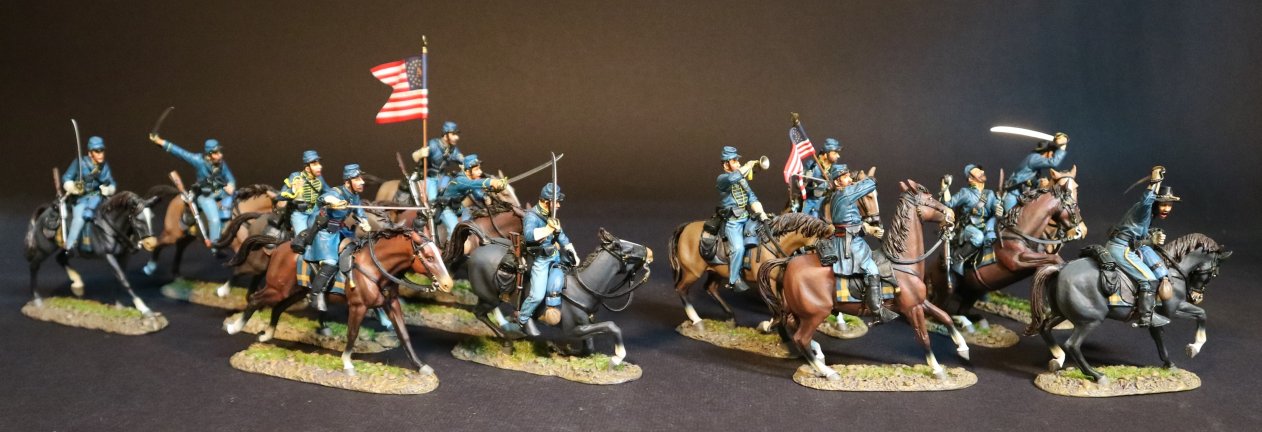
Daniel Oakey was an officer in the 2nd Massachusetts Infantry, which made up Brig. Gen. Adelbert Ames’ demi-brigade that supported Pleasonton’s horse soldiers.
“Having nothing to do as yet but smoke our pipes, we lolled on the grass and studied our cavalry friends”, Oakey recalled. “Custer was the most striking of the group with…his long hair, and spirited manner. He seemed to enjoy the shelling, and appeared to beam all over, almost dancing with excitement.”
When Buford called on the Bay Staters to dislodge elements of Brig. Gen. W.H.F. “Rooney” Lee’s brigade at a stonewall at the knoll’s western base, Oakey wrote that “Custer showed much interest” in accompanying them and “evidently would have enjoyed going with us.” The young officer, however, remained behind with Pleasonton.
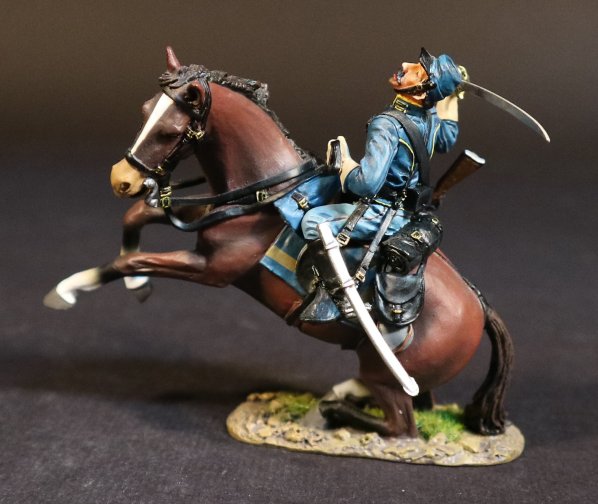
USBS-19
THE AMERICAN CIVIL WAR 1861 - 1865
THE BATTLE OF BRANDY STATION, JUNE 9th, 1863,
THE ARMY OF THE POTOMAC,
CAVALRY CORPS,
UNION CAVALRY
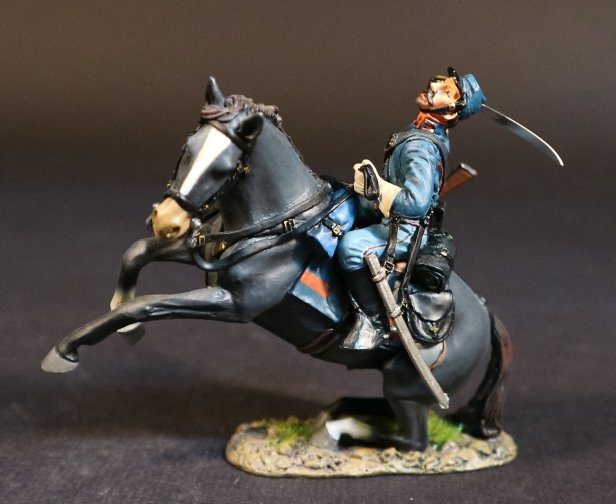
USBS2-19
THE AMERICAN CIVIL WAR 1861 - 1865
THE BATTLE OF BRANDY STATION, JUNE 9th, 1863,
THE ARMY OF THE POTOMAC,
CAVALRY CORPS,
2nd US CAVALRY REGIMENT
THE AMERICAN CIVIL WAR
THE FIRST BATTLE OF MANASSAS, 1861.
1st SPECIAL BATTALION, LOUISIANA INFANTRY (WHEAT’S TIGERS)
The battalion called the Louisiana Tigers was the creation of Roberdeau Chatham Wheat, and was to become one of the most notorious military corps ever to be raised during this conflict.
In New Orleans Wheat looked for his recruits among the Irish roustabouts and riffraff of the city.
His company was soon joined by four others and on June 9th 1861, they were mustered into the Confederate service as the 1st Louisiana Special Battalion.
The battalion soon gained a fine reputation for brawling and theft!
In action finally at the First Manassas, the Tigers showed they could also fight in battle.
An English observer wrote, “Although few in number these heroic soldiers sustained every shock with unwavering courage, and on more than one occasion dropped their rifles and rushed among the enemy with long bowie knives.”
Wheat, brave to the point of recklessness was killed 27th June 1862 at Gaines’ Mill. For the first time the battalion broke and ran. With Wheat gone there was no one to keep the Tigers in hand and on 21st August the battalion was disbanded and its men transferred to other Louisiana regiments serving in Virginia.
The name “Louisiana Tigers” however lived on to describe the Louisiana Brigade as it fought through to Appomattox.
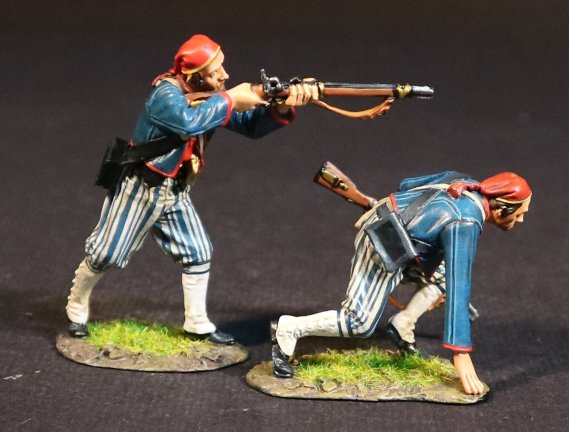
CSWT-08
THE AMERICAN CIVIL WAR 1861 - 1865
THE FIRST BATTLE OF MANASSAS, 1861
1st SPECIAL BATTALION, LOUISIANA INFANTRY,
(WHEAT’S TIGERS)
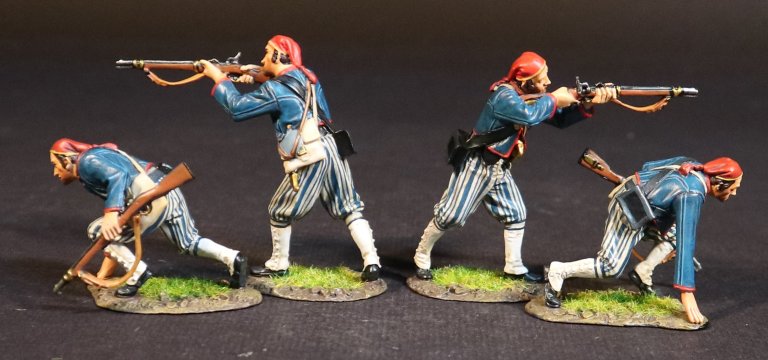
CSWT-08N
THE AMERICAN CIVIL WAR 1861 - 1865
THE FIRST BATTLE OF MANASSAS, 1861
1st SPECIAL BATTALION, LOUISIANA INFANTRY,
(WHEAT’S TIGERS)
2nd WISCONSIN INFANTRY REGIMENT, 1861
Following the Battle of Fort Sumter on April 16th 1861, President Abraham Lincoln issued a proclamation to call for 75,000 volunteers to put down the rebellion. The war department requested each state provide a certain number of regiments of volunteers. Wisconsin was requested to provide one regiment.
Following Wisconsin Governor Alexander Randall’s call to arms, 36 companies of men were enrolled to volunteer for the war effort, enough for 3 regiments.
The Second Wisconsin Infantry Regiment was the second unit created from these original volunteer companies.
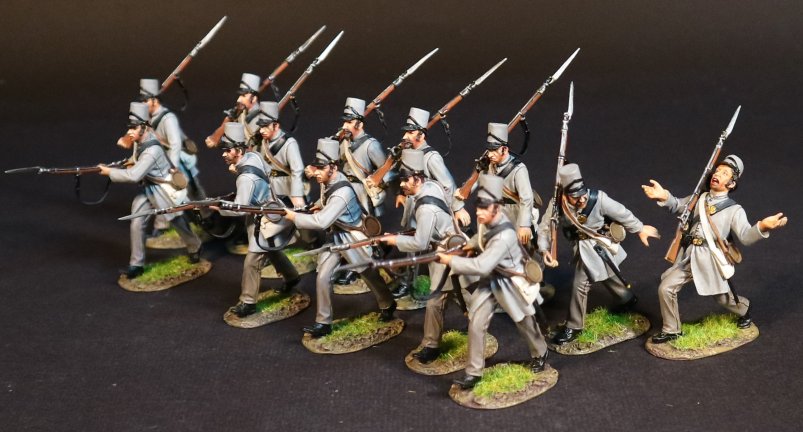
Governor Randal appointed 41 year old S. Park Coon Colonel of this new Regiment, who was a native of New York, had served as Wisconsin’s 2nd Attorney General, and was an influential Milwaukee County Democrat.
The Lieutenant Colonel Henry W. Peck was from Ohip and had graduated from the United States Military Academy at West Point in 1851. Peck provided some professional military experience and training, verses the political appointee Coon.
The Regiment formally mustered into federal service on June 11th 1861. Despite President Lincoln’s original request for 3 month volunteers, by June the need had become apparent for longer enlistments, and the 2nd Wisconsin was mustered as a three year regiment.
The Regiment was transported to Washington DC, and saw its first combat at the First Bull Run in July 1861, in a Brigade under William T. Sherman.
At the battle the men wore state militia grey uniforms, causing the 2nd Wisconsin to receive friendly fire from Union troops mistaking them for Confederates.
Due to the 2nd Wisconsin being involved in many issues of friendly fire during the First Battle of Bull Run, the uniform was officially changed from the militia grey uniform to the official United Stated Uniform.
The official Iron Brigade uniform in October 1861 consisted of a Hardee Hat, the M1858, 9 button infantry frock coat, and regulation dark blue trousers. This uniform would be the most iconic uniform utilized by the 2nd Wisconsin for much of the regiments service.
According to a veteran of the 2nd Wisconsin, Cullen B. Aubery, the 2nd Wisconsin infantry regiment’s nickname was the “Ragged butt Second”.
According to Aubery this came “from the fact that the government contractors had run short of good material when they made the pantaloons”, giving the 2nd Wisconsin a raggedy appearance when on parade.
Colonel Coon was never comfortable in his role as a military man, he and Peck were to resign on July 30th with Coon returning to politics.
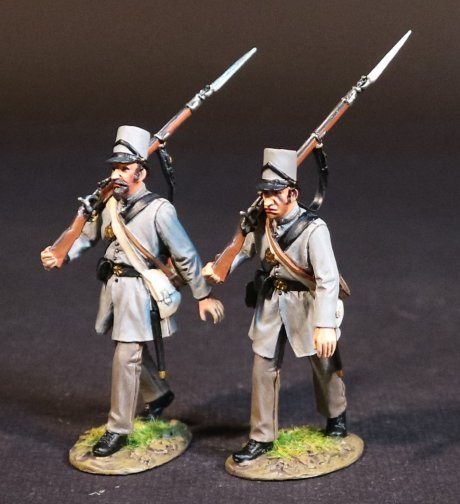
WIS2-01
THE AMERICAN CIVIL WAR 1861 - 1865
THE FIRST BATTLE OF MANASSAS, 1861
2nd WISCONSIN INFANTRY REGIMENT, 1861,
M. ESTELL AND FRIEND
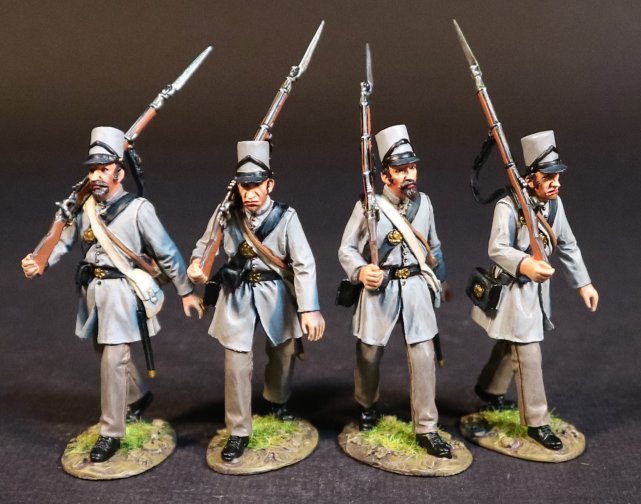
WIS2-01N
THE AMERICAN CIVIL WAR 1861 - 1865
THE FIRST BATTLE OF MANASSAS, 1861,
2nd WISCONSIN INFANTRY REGIMENT, 1861,
M. ESTELL AND 3 FRIENDS
The 2nd Wisconsin went on to spend most of the war as a component of the famous Iron Brigade of the Army of the Potomac, and participated in most of the critical battles of the eastern theatre of the war.
It suffered the largest number of casualties as a percentage of its total enlistment of any Union Army unit in the war.
The casualties reduced the regiment to an “Independent Battalion” of two companies by July 1864, and the remaining battalion was consolidated into the 6th Wisconsin Infantry Regiment in November 1864.
**PLEASE CONTACT YOUR LOCAL DEALER TO PLACE YOUR PRE-ORDERS**
THE AMERICAN CIVIL WAR
THE BATTLE OF BRANDY STATION, JUNE 9th, 1863
THE ARMY OF THE POTOMAC, CAVALRY CORPS.
The high ground on the farm of Richard Cunningham served as wing commander Brig. Gen. John Buford’s command post for much of the battle. Cavalry corps commander Alfred Pleasonton also observed the fighting from this area. Custer, an aide to Pleasonton was spotted here during the afternoon phase of the engagement.
Daniel Oakey was an officer in the 2nd Massachusetts Infantry, which made up Brig. Gen. Adelbert Ames’ demi-brigade that supported Pleasonton’s horse soldiers.
“Having nothing to do as yet but smoke our pipes, we lolled on the grass and studied our cavalry friends”, Oakey recalled. “Custer was the most striking of the group with…his long hair, and spirited manner. He seemed to enjoy the shelling, and appeared to beam all over, almost dancing with excitement.”
When Buford called on the Bay Staters to dislodge elements of Brig. Gen. W.H.F. “Rooney” Lee’s brigade at a stonewall at the knoll’s western base, Oakey wrote that “Custer showed much interest” in accompanying them and “evidently would have enjoyed going with us.” The young officer, however, remained behind with Pleasonton.
USBS-19
THE AMERICAN CIVIL WAR 1861 - 1865
THE BATTLE OF BRANDY STATION, JUNE 9th, 1863,
THE ARMY OF THE POTOMAC,
CAVALRY CORPS,
UNION CAVALRY
USBS2-19
THE AMERICAN CIVIL WAR 1861 - 1865
THE BATTLE OF BRANDY STATION, JUNE 9th, 1863,
THE ARMY OF THE POTOMAC,
CAVALRY CORPS,
2nd US CAVALRY REGIMENT
THE AMERICAN CIVIL WAR
THE FIRST BATTLE OF MANASSAS, 1861.
1st SPECIAL BATTALION, LOUISIANA INFANTRY (WHEAT’S TIGERS)
The battalion called the Louisiana Tigers was the creation of Roberdeau Chatham Wheat, and was to become one of the most notorious military corps ever to be raised during this conflict.
In New Orleans Wheat looked for his recruits among the Irish roustabouts and riffraff of the city.
His company was soon joined by four others and on June 9th 1861, they were mustered into the Confederate service as the 1st Louisiana Special Battalion.
The battalion soon gained a fine reputation for brawling and theft!
In action finally at the First Manassas, the Tigers showed they could also fight in battle.
An English observer wrote, “Although few in number these heroic soldiers sustained every shock with unwavering courage, and on more than one occasion dropped their rifles and rushed among the enemy with long bowie knives.”
Wheat, brave to the point of recklessness was killed 27th June 1862 at Gaines’ Mill. For the first time the battalion broke and ran. With Wheat gone there was no one to keep the Tigers in hand and on 21st August the battalion was disbanded and its men transferred to other Louisiana regiments serving in Virginia.
The name “Louisiana Tigers” however lived on to describe the Louisiana Brigade as it fought through to Appomattox.
CSWT-08
THE AMERICAN CIVIL WAR 1861 - 1865
THE FIRST BATTLE OF MANASSAS, 1861
1st SPECIAL BATTALION, LOUISIANA INFANTRY,
(WHEAT’S TIGERS)
CSWT-08N
THE AMERICAN CIVIL WAR 1861 - 1865
THE FIRST BATTLE OF MANASSAS, 1861
1st SPECIAL BATTALION, LOUISIANA INFANTRY,
(WHEAT’S TIGERS)
2nd WISCONSIN INFANTRY REGIMENT, 1861
Following the Battle of Fort Sumter on April 16th 1861, President Abraham Lincoln issued a proclamation to call for 75,000 volunteers to put down the rebellion. The war department requested each state provide a certain number of regiments of volunteers. Wisconsin was requested to provide one regiment.
Following Wisconsin Governor Alexander Randall’s call to arms, 36 companies of men were enrolled to volunteer for the war effort, enough for 3 regiments.
The Second Wisconsin Infantry Regiment was the second unit created from these original volunteer companies.
Governor Randal appointed 41 year old S. Park Coon Colonel of this new Regiment, who was a native of New York, had served as Wisconsin’s 2nd Attorney General, and was an influential Milwaukee County Democrat.
The Lieutenant Colonel Henry W. Peck was from Ohip and had graduated from the United States Military Academy at West Point in 1851. Peck provided some professional military experience and training, verses the political appointee Coon.
The Regiment formally mustered into federal service on June 11th 1861. Despite President Lincoln’s original request for 3 month volunteers, by June the need had become apparent for longer enlistments, and the 2nd Wisconsin was mustered as a three year regiment.
The Regiment was transported to Washington DC, and saw its first combat at the First Bull Run in July 1861, in a Brigade under William T. Sherman.
At the battle the men wore state militia grey uniforms, causing the 2nd Wisconsin to receive friendly fire from Union troops mistaking them for Confederates.
Due to the 2nd Wisconsin being involved in many issues of friendly fire during the First Battle of Bull Run, the uniform was officially changed from the militia grey uniform to the official United Stated Uniform.
The official Iron Brigade uniform in October 1861 consisted of a Hardee Hat, the M1858, 9 button infantry frock coat, and regulation dark blue trousers. This uniform would be the most iconic uniform utilized by the 2nd Wisconsin for much of the regiments service.
According to a veteran of the 2nd Wisconsin, Cullen B. Aubery, the 2nd Wisconsin infantry regiment’s nickname was the “Ragged butt Second”.
According to Aubery this came “from the fact that the government contractors had run short of good material when they made the pantaloons”, giving the 2nd Wisconsin a raggedy appearance when on parade.
Colonel Coon was never comfortable in his role as a military man, he and Peck were to resign on July 30th with Coon returning to politics.
WIS2-01
THE AMERICAN CIVIL WAR 1861 - 1865
THE FIRST BATTLE OF MANASSAS, 1861
2nd WISCONSIN INFANTRY REGIMENT, 1861,
M. ESTELL AND FRIEND
WIS2-01N
THE AMERICAN CIVIL WAR 1861 - 1865
THE FIRST BATTLE OF MANASSAS, 1861,
2nd WISCONSIN INFANTRY REGIMENT, 1861,
M. ESTELL AND 3 FRIENDS
The 2nd Wisconsin went on to spend most of the war as a component of the famous Iron Brigade of the Army of the Potomac, and participated in most of the critical battles of the eastern theatre of the war.
It suffered the largest number of casualties as a percentage of its total enlistment of any Union Army unit in the war.
The casualties reduced the regiment to an “Independent Battalion” of two companies by July 1864, and the remaining battalion was consolidated into the 6th Wisconsin Infantry Regiment in November 1864.
**PLEASE CONTACT YOUR LOCAL DEALER TO PLACE YOUR PRE-ORDERS**


